| 13 November 2014 |

| |
| BBC Homepage | | |
| |||
| Contact Us | | |
About ShetlandYou are in: Guernsey > Island Games > Island Games 2005 > About Shetland > Facts about Shetland 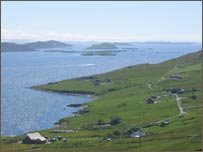 Facts about ShetlandWhy is there a lack of trees in Shetland and why for hundreds of years Shetland was cut off from the outside world for most of the winter? One remark from colleagues has been about the lack of trees on the landscape. More than five thousand years ago the first settlers cleared Shetland's woodland and scrub to prepare the ground for crops or improve its pastoral quality. Apparently it’s only within the last couple of hundred years that trees have been planted again. One of the most interesting examples is at Halligarth in Unst, where Britain's most northerly woodland copse was planted in the early 19th century. It's thought trees will play an increasingly important role. Until the 1930s the only way to travel to and from the island was by the sea. When the glaciers melted more than ten thousand years ago, the sea created more than a hundred Shetland islands. Nowhere is more than five km from the sea and even sheltered inland valleys can feel the influence of salty gales. The coastline has everything from high cliffs to sandy bays and sheltered inlets. There are a wide range of habitats for fish, seals, otters, birds, plants and insects. Shetland is on the overlap between the temperate and sub arctic climatic zones, in the winter it’s the warmest place on the latitude 60 degrees N - the sea never freezes over! Modern Shetland boat builders use similar designs and methods to their Viking forebears. For hundreds of years Shetland was cut off from the outside world for most of the winter. Savage storms in the North East Atlantic and the lack of lighthouses deterred skippers of sailing "packets" from venturing near Shetland in the darkest quarter of the year. Until the invention of the steamship Shetland might only get mail a handful of times a year and there was no regular passenger or freight service. Some of Shetland's most spectacular sites are the 120 Iron Age Brochs around the coast. Part of their purpose must have been to act as a network of watch towers. There's a lot of work going on at Old Scatness in the south of the island at the moment trying to unfold the story of the broch there and the Iron Age Village surrounding it. last updated: 13/10/2008 at 12:35 SEE ALSOYou are in: Guernsey > Island Games > Island Games 2005 > About Shetland > Facts about Shetland |
| | About the BBC | Help | Terms of Use | Privacy & Cookies Policy |