| 13 November 2014 |

| |
| BBC Homepage | | |
| |||
| Contact Us | | |
Gibraltar to OrkneyYou are in: Guernsey > Island Games > A-Z of Islands > Gibraltar to Orkney > The Isle of Man 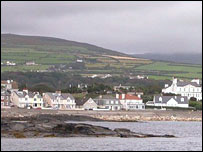 The Isle of Man The Isle of ManIsle of Man is not part of the UK but an independent country which controls its own affairs. The Isle of Man is located in the Irish Sea. Regular sea links are maintained between the Isle of Man and England, Scotland and Ireland with good daily air services also to all the major UK airports, including London Heathrow. The Vikings are credited with setting up a system of government known as Tynwald which has existed continuously for over a thousand years. Their language and culture are reflected in place names and a legacy of sculptured stone crosses. After the end of the Norse rule in 1266 the island came alternately under Scottish and English rule. The Revestment Act of 1765 returned the island to direct British rule which continued until the mid-1800s when the political power gradually devolved from London to the island. Although the Isle of Man is one of the British Isles it is not part of the UKbut an independent country which controls its own affairs. The 1996 census recorded a total population of 71,769. Tynwald Day is celebrated annually on 5th July, when Parliament assembles on Tynwald Hill for this ancient ceremony, and new laws are promulgated in both English and the Manx language. The Island has developed into a modern international offshore finance centre. According to 1994/95 figures, GNP for the island was: finance sector 36%, manufacturing 11%, tourism and leisure 6%, agriculture, forestry and fishing 2% and other services 35%. The Manx language, ‘Gaelg’, is one of the Celtic family of languages akin to Scottish and Irish Gaelic. Once universally spoken, there was a rapid decline in the 18th and 19th centuries until it became almost extinct. However place names and signs still appear in both Manx and English, and the language is now being taught again in the primary and secondary schools. There is a strong love of music, singing and Manx dancing, as witnessed at the popular annual Yn Chruinnaght Festival of Manx and Celtic literature, music, art and drama and at the Manx Music Festival. Sport is one of the great Manx traditions, and very much a part of the island’s culture and heritage. Popular sports include archery, athletics, badminton, basketball, cricket, cycling, equestrian events, football, gymnastics, hockey, martial arts, motor sports, netball, shooting, swimming, squash, tennis and water sports. Triathlon and handball are also increasing in popularity. Sport also makes a big impact on tourism. Many thousands come to take part in the annual student, hockey and bowls festivals, and to see the world-famous motorcycling races, international cycling and car rallying events. The Isle of Man and Guernsey are the only islands to have hosted the Games twice. The Isle of Man hosted the very first one back in 1985, and again in 2001. Medals in 2007 Games in RhodesGold: 26 Medals in 2005 Games in ShetlandGold: 34 Medals in 2003 Games in GuernseyGold: 29 last updated: 24/06/2009 at 16:53 You are in: Guernsey > Island Games > A-Z of Islands > Gibraltar to Orkney > The Isle of Man |
| | About the BBC | Help | Terms of Use | Privacy & Cookies Policy |