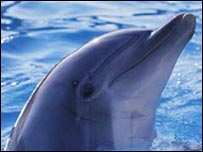
When watching marine mammals please follow these simple guidelines which have been devised by the Whale and Dolphin Conservation Society - Keep your distance. Never go closer than 100 metres (200 metres if another boat is present).
- Never drive head on to, or move between, scatter or separate dolphins. If unsure of their movements, simply stop and put the engine in neutral.
- Spend no longer than 15 minutes near the animals.
- Special care must be taken with mothers and young.
- Maintain a steady direction and slow "no wake" speed.
- Never try to swim with them for your safety and theirs.
- Do not dispose of any rubbish, litter or contaminants at sea.
|
Rescue What to do if you find a live stranded dolphin, porpoise or whale - Get expert help immediately - contact the Police (Tel: 725111 or GSPCA (Tel: 257261).
- Keep the animal's skin moist with sea water, put Vaseline around the blowhole to avoid it drying out.
- Erect a shelter to provide shade.
- Keep the flippers and flukes cool.
- Keep onlookers and their dogs at a distance to reduce stress to the casualty.
- Make as little noise as possible.
- Keep the blowhole clear of sand, water and obstruction.
- Try to keep the animal upper side up.
- Try to find time to take photos and make notes (avoid flash photography)
- Look for any obvious signs of wounds or discharges (e.g. blood or pus).
- If you have to touch the animal then wear adequate personal protective equipment.
|
What NOT to do - Do not stand very close to the tail or head.
- Do not push or pull on the flippers, flukes or head.
- Do not cover the blowhole.
- Do not let water or sand to enter the blowhole.
- Do not apply suntan lotion to the animal's skin.
- Do not touch the animal more than is necessary, they can carry diseases that are transmissible and potentially fatal to humans including Brucellosis.
- Do not attempt to rescue the animal yourself - leave it to the experts!
|
Guernsey has a number of trained marine mammal medics and special first aid equipment. The Police will contact the Guernsey Animal Shelter (G.S.P.C.A.) on your behalf, who in turn will arrange for a specialist team to care for the dolphin or whale. What to do if you find a stranded seal - Contact the Police (Tel: 725111) or Animal Shelter (Tel: 257261) immediately.
- Do not approach the seal it is likely to bite you.
- Do not attempt to rescue it yourself - leave it to the experts!
|
The above emergency contact numbers should also be used for stranded turtles, etc. Organisations/individuals that should be contacted in the event of a live or dead stranding of a marine mammal 1. La Société Guernesiaise
Martin Gavet, Marine Mammal Recorder and qualified marine mammal medic (Tel: 727967). He should be contacted so that records may be taken. 2. Environment Department
The Environment Department is the manager of the beach.
Tel: 717000. |