| 24 September 2014 |

| |
| BBC Homepage | | |
| |||
| Contact Us | | |
OccupationYou are in: Guernsey > History > Occupation > What the States prepared 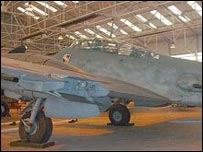 Messerschmitt Me 410, RAF Museum Cosford What the States preparedMost of the discussion about the Occupation centres on when the islands were under the control of the German forces. Here is a different look at what the States prepared. In August 1939 the States ordered four guns, two for coastal defence and two anti-aircraft guns. They then cancelled this order once the war had begun. The guns wouldn't have all been in the island for 18 months and by then it would be unlikely that the Royal Artillery would have been available to train the Guernseymen. Instead the States decided to concentrate on getting Lewis guns to protect against low flying aircraft. It seems the States decided the danger of attack from the sea was remote and released the Royal Guernsey Militia for active service overseas. 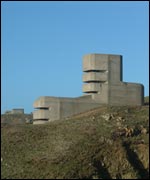 The Germans built coastal defences. Lessons in Europe made it clear that to fight air attacks you need fire-fighters and stretcher carriers more then soldiers. The men who were over military age or unfit for active service were formed into a defence force (a bit like Dad's Army) also to be called the Royal Guernsey Militia. They had part-time civilian jobs while not on duty. During the first eight months of the war everything adopted by the States was against air raids and included:
Cinemas were reopened, big sporting events took place and shops asked for a relaxation of the blackout rules and were allowed to light up their windows to show off the displays. The Chamber of Commerce even suggested that Guernsey should be advertised as a safe place where those living in UK danger zones could migrate too! Until spring 1940, which saw the invasion of Belgium, Holland and Luxembourg, the majority of islanders took more interest in local footy than the progress of the war. In the summer refugees from France began to arrive in the islands. 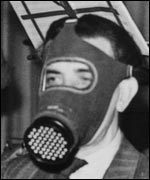 A Gas Mask. On June 18th in the British Cabinet and in the Royal Court of Guernsey talks took place about whether to defend or disarm the islands. The outcome was known only to a privileged few until a BBC radio broadcast on the 11th July which said that transport would be provided to evacuate the islands and the islands would be demilitarised. Some of the islanders stayed behind and with no guns, munitions or soldiers they were not heavily bombed like parts of England but were an easy target for occupation. last updated: 03/04/2008 at 14:56 SEE ALSOYou are in: Guernsey > History > Occupation > What the States prepared |
| | About the BBC | Help | Terms of Use | Privacy & Cookies Policy |