The deep sea earthquake off the coast of Indonesia produced one of the worst natural disasters in recent history. It's believed that over 250,000 people were killed as a result of the deadly tsunami that hit 13 different countries on Boxing Day 2004.
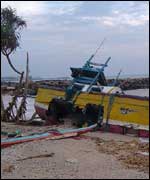 |
Sri Lanka was one of the countries that felt the impact of the tsunami wave as it struck coastal areas and brought death and destruction with it. It's estimated that over 25,000 people lost their lives in Sri Lanka and a million left homeless. In the immediate aftermath, salt water from the sea had contaminated the water table, making water from local wells undrinkable. There was an urgent need for supplies of all kinds.
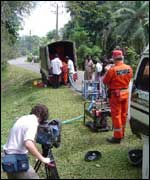
Gloucestershire based search and rescue outfit SARAID went out to Sri Lanka to provide specialised support to the various aid agencies that were tasked to bring relief to the country's people. The group borrowed a water filtration unit and made the 10 hour journey from Britain to Colombo in Sri Lanka.
Stefan Hopkins, the director of SARAID, led the mission and he took a minidisc recorder from BBC Gloucestershire to record what he found out there. As an experienced search and rescue operator, Stefan has witnessed the aftermath of natural disasters but even he was stunned by the sheer scale of the immense devastation caused by the earthquake.
Here are some of Stefan's audio diaries from Sri Lanka which capture the desperate situation just two weeks after the earthquake:
Arriving in Colombo
 |
Since the earthquake happened on Boxing Day 2004 SARAID had been on standby to head out to the region. They were waiting for a clear picture of what sort of relief was needed and the best location for it to be deployed. They received the go-ahead for Sri Lanka early in January 2005.
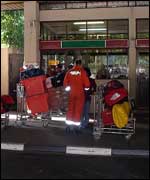
The six strong team landed in the Sri Lankan capital Colombo after a 10 hour flight from Britain and promptly headed south to one of the areas severely affected by the tsunami.
Though they knew the desperate scenario they were heading into from past experience, the team were in high spirits - glad to be doing something constructive after almost two frustrating weeks of waiting to hear whether they were needed or not...
Listen to Stefan's audio diary - Part 1To listen to audio content on the BBC you will need to have a program called RealPlayer installed on your computer.
Download it for FREE by clicking here

Saturday 8th January 2005
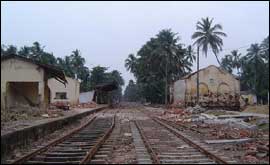
Stefan and the team got their first glimpse of the destruction in the region to the south of Colombo and saw for themselves just how bad it was. Buildings were flattened and the devastation was obvious.
The team received a report of many people requiring water at a local temple but it proved to be inaccurate as there were only 75 people there and they already had an adequate supply of water.
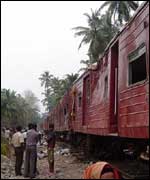 |
After that the team headed further south to the scene of a train derailment which resulted in the death of over a thousand people. The Sri Lankan government had already cleared the site of bodies and much of the debris but the eerie sight of the battered train remained.
The team moved further south and based themselves at a temple where they managed to drain two wells of salt water. They also chlorinated a third well to make the water drinkable.
Listen to Stefan's audio diary - Part2
To listen to audio content on the BBC you will need to have a program called RealPlayer installed on your computer.
Download it for FREE by clicking here
Sunday 9th January 2005
The team travelled south again towards Galle where the devastation was even worse.
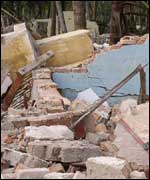 |
The first thing they noticed in Galle was the utter destruction - the town had been virtually wiped off the map by the tsunami. Around 5,000 people died in Galle and the team noted that the smell of death was heavy in the air wherever they went.
After receiving instructions from the local police chief, the team journeyed to Harbaraduwa. It was apparent that the further south they went, the worse the devastation was becoming. It was also becoming clear that there was a lot of confusion about the situation in the area - nobody seemed to have a clear understanding of what was needed.
They were then told by a local town council to visit three temples to help around 600 people who were without fresh water. But they suffered a frustrating setback when a source of water was denied to them when the need in the surrounding area was so great.
The team ended the day tired and frustrated after having travelled from one location to another without getting to help the local people...
Listen to Stefan's audio diary - Part 3
To listen to audio content on the BBC you will need to have a program called RealPlayer installed on your computer.
Download it for FREE by clicking here
Monday 10th January 2005
A new day and Stefan sent two of his team to Colombo to receive instructions from the the aid agencies based there. Meanwhile he and the rest of the team went to Saregama to provide fresh water to children at a local school.
However, they suffered another setback with a fresh water lake being contaminated by sea water. Fortunately they located another source - a fresh water river. They processed 2,000 litres of fresh water and delivered it to the school.
The team finished the day in a happier mood because they'd done exactly what they set out to do in providing fresh water for local people. They also helped to reopen the school.
All in all a good day, as Stefan notes...
Listen to Stefan's audio diary - Part 4
To listen to audio content on the BBC you will need to have a program called RealPlayer installed on your computer.
Download it for FREE by clicking here
In pictures...
Stefan and his team also managed to capture the aftermath of the tsunami on their digital camera. Here are their pictures from Sri Lanka:
(12 Pictures)
See also: Rescue team supplies fresh water For more information about SARAID including how you can support the agency, visit their website. 
If you would like to comment on this story get in touch at gloucestershire@bbc.co.ukor have your say on our messageboard | 




 Gloucestershire based search and rescue agency SARAID went to Sri Lanka to help with the disaster relief effort. Stefan Hopkins, director of the agency, recorded an audio diary for us...