The effects of buying natural paving
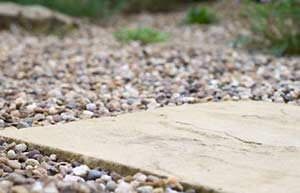
You're planning a smart new terrace and have been advised to use natural stone rather than imitation. Even though it will probably cost more, it will weather beautifully and will last for ever. But is it acceptable from an environmental and ethical point of view?
That depends on where the paving stones come from, how they were extracted and how they were delivered to you. Indian sandstone has become increasingly popular due to the competitive price and quality of the stone. But if your stone comes from India there's a good chance that it has been quarried by children as young as ten. Recent reports revealed that those children, who make up as much as 25 per cent of the workforce in some Indian quarries, wield sledge hammers and operate jack hammers without any shoes, gloves or protective gear. The conditions for the workers in many of these quarries are harsh. Migrant families live in makeshift shelters, have little or no medical care, and are sometimes bonded to their employers which means they work to pay off the money they have borrowed to survive, and if they die, this debt is passed on to their children.
The environmental cost is also high: polluted groundwater, the spoiling of the landscape by illegal dumping, and the energy consumed to transport the stone half way across the world to our gardens.
But the environmental cost applies at home too. Heavily paved areas do not support wildlife and prevent water from seeping into the soil naturally to reach the water table. This run-off goes into overloaded drains and is a major contribution to flash flooding - something that has been a major hazard this year. In addition, the heat absorbed by paving during the day is released at night, leading to poor air quality.
Mark Laurence, one of the UK's leading designers of sustainable gardens, says that all hard landscaping materials have an ecological price tag. Cement, the binder that holds the constituents of concrete together, and is heated to a temperature of 1450C in a vast kiln, accounts for ten per cent of the world's carbon emissions and is certainly top of the list of materials he tries to avoid. Even gravel has associated problems. It's often recommended as an environmentally friendly material because it allows water to drain freely into the soil and consumes no energy to manufacture, but it creates problems when it's strip-mined off the seabed as this destroys unknown amounts of marine life.
Did you know?
- Almost a quarter of all front gardens in NE England have been completely paved over. It's estimated that London has lost the equivalent to 5,200 football pitches by householders paving over their front gardens.
- Paving, tarmac and concrete increase the amount of rainwater than runs off by as much as 50 per cent, leading to flooding.
- Most concrete paving, also marketed as 'Reconstituted Stone', uses Portland cement to bind the aggregates and sand. Cement production is one of the most energy intensive manufacturing processes in the world. The process also gives off a cocktail of air pollutants such as dust, dioxins and hydrocarbon compounds.
- The UK produces about 12 million tons of cement per year.
- The production of concrete in the UK is responsible for 2.6 per cent of carbon emissions, compared with 28 per cent from transport (excluding international aviation and shipping).
Viewpoint
Rebecca Matthews Joyce, RHS Principal Advisor on Environmental Policy. "We should try to minimise the amount of hard landscaping we use. A garden full of concrete, Indian sandstone and slate planters from China is only achievable at great cost to the environment. Ask yourself: do you really need a whole path or can you get away with a few stepping stones? Re-using materials has got to be the best way forward - there's probably enough hard material already to provide for all our gardens. If you can't do that, try at least to source your stone locally. Being sustainable takes more effort - you need to think ahead, plan, spot things - but there's plenty of material out there, waiting to be re-used."
David Collins, Sustainability Manager at the Concrete Centre, argues that although many environmentalists regard the manufacture of concrete as a major polluter, "Concrete is a small net contributor to greenhouse gases in the UK. It accounts for 2.6 per cent of UK CO2 emissions. In comparative terms manufacturing a tonne of crisps is around 22 times more CO2 intensive than the manufacture of a tonne of concrete and some paving products now contain up to 85 per cent recycled material." Collins points out that it's almost entirely sourced from within the UK, provides employment to some 40,000 people; it's durable, often made from recycled sources, and the cement and concrete industries in the UK are actively taking measures to minimise the carbon footprint of their products to be more environmentally responsible.
What you can do
- Re-use concrete slabs, stone, bricks, cobbles and aggregates. Enquire locally at municipal waste recovery centres, at salvage yards or on freecycle sites online.
- When using concrete, ask your landscaper or designer to source a mix that uses recycled aggregates and that replaces Portland cement with materials that would otherwise be landfilled, such as PFA (Pulverised Fuel Ash) or GGBS (Ground Granulated Blastfurnace Slag.
- If using paving slabs or blocks, ask for ones that use recycled materials. Set paving in sand, rather than mortar, so that rainwater can percolate through the gaps. For front gardens, use resin bonded gravel and aggregates, held in cells made from recycled plastic, or permeable paving with gaps that allow water to drain into the soil or to be stored and used to water the garden. If you use conventional concrete block and slab paving, slope it so that the water runs onto the garden.
- For pathways, choose from a range of natural or recycled materials, such as chipped wood or bark, glass chips, crushed brick, shells, recycled aggregates.
- If you want Indian sandstone or Chinese slate try sourcing ethical importers, who are signed up to the Ethical Trade Initiative. This means that they have agreed to a code of labour practice, which makes sure that their suppliers comply with it, and ensures safe, healthy and fair conditions for the workers. If the importer is not an ETI member, then ask questions about the supplier, and what measures are being taken to improve working conditions. If the stone you're offered is amazingly cheap, then it's likely to be sourced from an illegal quarry.
- Use minimal amounts of paving and mix this with other natural materials.
- Ask your local garden centre where they source their paving products from and whether they can show their provenance in the labelling.
- Use permeable paving blocks and permeable grass grids for hard standing, which lesson the environmental impact of paving over front gardens.