Pete Belben
Tell us a bit about Barrington Court and what you grow there.
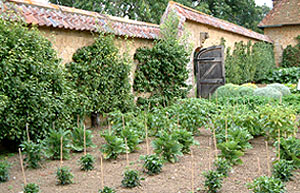
The kitchen garden at Barrington Court has been gardened since its creation in 1920. It was the main source of fresh fruit and vegetables for the Lyle family who lived and gardened at Barrington until 1991 when the property changed to National Trust management. Since this time the garden has supplied the National Trust restaurant rather than the estate, meaning that the emphasis has changed from year-round vegetables to a harvesting season from March to November. We grow as wide a range of fruit and veg as possible, and new vegetables are tried and tested in the restaurant, adapting the menu according to the weekly availability.
What advice would you give to someone wanting to try growing their own?
The best advice I can give is to work hard at getting the soil in good condition before starting anything. Removing perennial weeds and incorporating plenty of compost is hard work but it will be so beneficial. Look after your soil too: don't tread on it if it's too wet, as it compacts the soil and damages the soil's structure. If you're growing vegetables for the first time, plan a plot rotation, even for a small area. To begin with, try growing seed in modules rather than sowing straight into the ground, as this gives you more control over quantities and also the chance to keep ahead of weeds and pests. The seedlings can then be transplanted into final positions and spacings once the weather is favourable. Don't be tempted to transplant seedlings too early, particularly if you have wet soil.
With the country getting warmer, is it now possible to grow species here that wouldn't have survived 20 years ago?
Certainly where we are in Somerset we can grow far more of what we would traditionally class as greenhouse crops outside. We now grow aubergines, peppers, chillies, tomatoes, tomatillos and lemon grass without any shelter in the summer, although the plants are raised from seed indoors first and then planted out in the third week of May. The kiwi fruit is also quite happy with the hotter conditions!
What do you recommend for gardeners looking for something a bit different?
We grow so many different vegetables at Barrington Court that it's difficult to choose, but I think these are definitely worth trying.
Sea kale (Crambe maritima)
 A permanent crop that you can often see growing wild on British beachlands, sea kale is illegal to harvest in the wild but easy to trying grow at home. It's one of Britain's few native vegetables, and is forced in the spring in the same way as rhubarb to blanch the stems. Despite being a winter vegetable, it has a lovely, delicate 'nutty' taste that contrasts well with other seasonal produce. Being a seaside plant, it likes to be planted in well-drained soil in a sunny spot, and benefits from a light dressing of salt. It is easily propagated from root cuttings and doesn't need much additional care. It also looks rather pretty - during the summer, the smokey-grey leaves are covered in a cloud of small white flowers.
Kohl rabi (Brassica oleracea gongylodes)
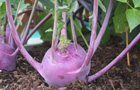 This looks rather like a miniature turnip. It's a member of the cabbage family (brassica), but unlike its larger cousins, kohl rabi takes up little space in the vegetable bed and is quick to grow, being ready to harvest six to eight weeks after sowing seed. It's best eaten before it gets too large - about the size of a tennis ball. As a fast-growing plant, it really benefits from extra watering in the summer to keep it healthy. Being a brassica, it prefers to grow in a firm soil but it will cope with dry, sandy ground as well. Watch out for flea beetle in hot dry summers: if you do have problems, cover the plants with garden fleece to keep the pests at bay.
Asparagus pea (Lotus tetragonolobus, syn. Tetragonolobus purpurea)
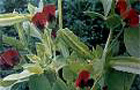 If you love the taste of asparagus but don't have space for permanent crops in your vegetable bed, asparagus peas are well worth trying. These small, shrubby plants produce pretty, sweetpea-like maroon flowers which are followed by small seedpods. These pods have the flavour and consistency of asparagus when cooked in butter with a little salt - delicious! The pods should be picked when they're an inch long (2.5cm). Don't be tempted to leave them until they're longer or they will be tough! The seed is best sown in pots or modules and the seedlings then planted out in late May into open ground. They prefer a light, well-drained soil in a sunny position and regular watering. As a member of the legume family, the roots of the plant will fix extra nitrogen into the soil, making it ideal for brassicas the following year.
Tomatillo (Physalis philadelphica)
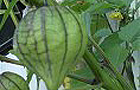 If you want tomatoes with a tang, Mexican tomatillos are the thing to grow. Looking like a cross between a tomato and a physalis, these little fruits are eaten green and have a sweet-yet-tart taste that makes them ideal for salads and sauces. Although they can be grown outdoors in a warm sheltered spot, they prefer the warmth of a greenhouse. Grow in the same way as tomatoes by sowing indoors in March/April and potting on into 9cm pots ready for hardening off and planting out late May. If you're planting outdoors, try to avoid windy areas as the stems can be brittle and prone to breaking, and choose a spot that allows the plants to soak up the summer sun that they love.
Where to buy more unusual vegetables
You may not find many of these plants in your local garden centre, but there are many mail-order specialists across the country who will be able to help. Follow the links below for retailers listed with the RHS.