
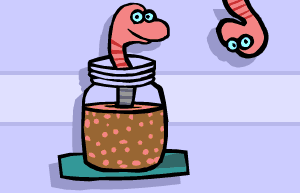
This project will show children how worms turn plant waste into soil, introduce them to 'recycling' and 'useful waste', and encourage them to look closely at worms and other garden wildlife.
This project will show children how worms turn plant waste into soil, introduce them to 'recycling' and 'useful waste', and encourage them to look closely at worms and other garden wildlife.
Half an hour to set up and several weeks of observation.
1 Ask your children to cover their work surface with newspaper. They will need to wash their large jar carefully so that it doesn't smash. You may want to help younger children with this.
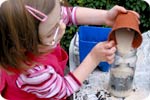
2 Help your child to put a layer of sand at the bottom of the jar, about 1cm (0.4in) deep.
3 Add a thick layer of soil, then add another thin layer of sand, then another thick layer of soil. Ensure there is about 5cm (2in) of space at the top.
 4 Now for the fun part! Ask your children to go and find some worms. Before they put them in their jar, ensure they have a good look at them. Can they tell which end is which? How? Can they guess how a worm moves? Can they see the hairs on the worms skin?
5 They need to put the worms in their jar, then add some old leaves, vegetable peelings, tea leaves and overripe fruit if you have any.
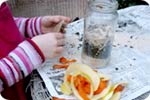
6 Then they can put the lid on - with a couple of holes in the top - place black paper around the jar and put it into a cool, dark cupboard. Leave it for about a couple of weeks and then observe what the worms are doing.
7 What has happened to the vegetable peelings?
8 What patterns have the worms made in the earth?

BBC © 2014The BBC is not responsible for the content of external sites. Read more.
This page is best viewed in an up-to-date web browser with style sheets (CSS) enabled. While you will be able to view the content of this page in your current browser, you will not be able to get the full visual experience. Please consider upgrading your browser software or enabling style sheets (CSS) if you are able to do so.

