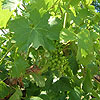
This grape vine is a vigorous, high-powered tendril climber, which can easily cover a house wall if left unchecked, covering it in large, lobed, bright green summer leaves up to 15cm long. The tiny green summer flowers are followed by late summer bunches of small grapes. For a Vitis with strong autumn leaf colour, go for the deep, dark purple 'Purpurea', and for tasty edible grapes grown against a sheltered, sunny garden wall, try the likes of 'Brandt' and 'Gloire de Boskoop'. Vitis can easily be cut back the moment it gets close to the guttering, ideally when dormant.
Eucalyptus gunnii Cider gum
Many eucalyptus species produce two kinds of foliage: the long sickle-shaped leaves of adult branches, and the lush rounded leaves distinctive of young shoots. They are naturally trees, sometimes reaching a great height, but in gardens regular firm annual pruning can keep them as large shrubs and maintain a supply of the juvenile foliage enjoyed by gardeners and flower arrangers. Only a few species are reliably hardy, and of these E. gunnii is the most popular. Cold winds are more injurious than frost, and plants are best grown in sunny sheltered spots. The Royal Horticultural Society has given it its prestigious Award of Garden Merit (AGM).
Typha gracilis Bulrush
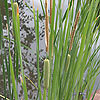
This hugely impressive bulrush is, in the wild, found growing beside lakes and ponds. The flowers are catkins, which gradually turn brown, releasing downy seeds that get wafted away on the breeze. Plant it in an aquatic basket and it'll be well behaved, unable to spread by runners. If you have a large pond, set it in the mud, but be prepared to do an annual cull to stop it going everywhere. Plant it from 30-40cm deep under water. For small ponds stick to the 75cm-high Typha minima.
Pontederia cordata Pickerel weed
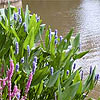
This is a glorious water plant, not least for its conspicuous tight spikes of blue flowers towards the end of the season. It is a North American native, naturally colonising large areas of swamps, and the plants are happiest where they can spread freely in marginal mud. To confine their spread they are best planted in baskets, but make sure they are covered by 23-30cm (9-12in) of water in cold districts to ensure their safety from frost. They also grow well in bog gardens, but should be mulched for protection in early winter. The Royal Horticultural Society has given it its prestigious Award of Garden Merit.
Nymphaea 'Marliacea Chromatella' water lily
Waterlilies are always an excellent choice for ponds, however, it is worth selecting the right plant for its location since some lilies can grow very large and swamp your pond. A good choice of plant if you have a large pond since it is capable of spreading to 1.2m (4ft). This variety bears large 15-20cm (6-8in), olive-green leaves with attractive bronze marbling and large canary-yellow flowers 15cm (6in) across with broad incurved petals and bright golden stamens. Plants should be situated in the sun since they need at least six hours sun per day to flower well, in addition, they do not enjoy running water so they should be kept well away from moving water, so cannot be grown near a fountain or waterfall.
To view the panoramic image, click on the garden with your mouse and drag it around the picture. To find out about the planting hotspots in the garden, click on the leaf icon above. To start and stop the audio commentary click on the speaker icon.
If you're having problems viewing the panoramic images read our help page. Alternatively, take a look at our still photography of all of the show gardens.
"Our design uses imagery from traditional Australian art to recreate a journey through the country’s wetlands. In Australian ground paintings, concentric circles are used to symbolise resting places and adjoining straight lines symbolise travel. The walkway through our garden takes this as its theme.
"The garden evokes the environment of the wetlands. A bird hide represents the rich diversity of wildlife, and aquatic planting banks interwoven with architectural stems suggest the ephemeral nature of the landscape."
Loi Man and Jonathan Martin - designers of the Banrock Station garden
This garden has been voted the public's favourite in this year's BBC RHS People's Award.











 "Our design uses imagery from traditional Australian art to recreate a journey through the country’s wetlands. In Australian ground paintings, concentric circles are used to symbolise resting places and adjoining straight lines symbolise travel. The walkway through our garden takes this as its theme.


