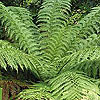
Tree ferns are becoming more and more popular for the garden and D. antarctica one of the hardier varieties. The thick mass of roots form a trunk, which can eventually reach about 6m (20ft) in the wild. The foliage appears in spring from the top of the trunk, unfurling from the centre to open up into large, rich green fronds. Grow in dappled or deep shade in slightly acidic soil. In winter protect the crown by wrapping it up with straw or dead fronds. It has been given an Award of Garden Merit (AGM), which is for plants of outstanding excellence.
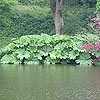
Gunnera manicata Gunnera
Gunnera is one of the biggest and most spectacular, architectural, herbaceous plants, commonly thought of as 'giant rhubarb'. The plants need a lot of space because it is difficult to restrict their size. They look best as specimen plants in a damp bog garden, or beside a large pond where the reflections reveal the prickly undersides of the leaves. The fat growth buds clustered in the crown are prone to frost damage, so pile the dead leaves and stems into a mound over the plants in autumn for winter protection - they make quite a feature of their own. The Royal Horticultural Society has given it its prestigious Award of Garden Merit.
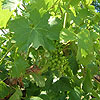
Vitis vinifera Grape vine
This grape vine is a vigorous, high-powered tendril climber, which can easily cover a house wall if left unchecked, covering it in large, lobed, bright green summer leaves up to 15cm long. The tiny green summer flowers are followed by late summer bunches of small grapes. For a Vitis with strong autumn leaf colour, go for the deep, dark purple 'Purpurea', and for tasty edible grapes grown against a sheltered, sunny garden wall, try the likes of 'Brandt' and 'Gloire de Boskoop'. Vitis can easily be cut back the moment it gets close to the guttering, ideally when dormant.
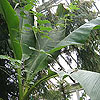
Musa basjoo Japanese banana
This Japanese banana has striking foliage - large bright green leaves, arching up from a main stem. It brings a tropical atmosphere to any garden, and in ideal conditions, fruit may be produced although not in the UK. The flowers are creamy yellow with large brown bracts and are arranged on a pendant spike. Behind the flowers the small inedible bananas form. It is a tender perennial and should be moved to a frost-free area during winter and planted out when all chance of frost has past, or be wrapped in horticultural fleece in milder areas.
Betula pendula 'Youngii' Young's weeping birch
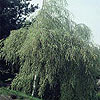
Young's weeping birch develops a dense mass of growth which clusters at the top of the trunk to form a dome- or mushroom-shaped tree with long, pendent, slender branches that often reach the ground. In its early stages it may need some formative pruning to transform an untidy tangle into a graceful cascade of foliage. Inner shaded twigs may die out and can be pruned as well. Growth can be rapid, up to 90cm (3ft) per year while young. It makes a fine specimen tree on a lawn, casting only light shade and sufficiently airy for bulbs to grow at its foot.
To view the panoramic image, click on the garden with your mouse and drag it around the picture. To find out about the planting hotspots in the garden, click on the leaf icon above. To start and stop the audio commentary click on the speaker icon.
If you're having problems viewing the panoramic images read our help page. Alternatively, take a look at our still photography of all of the show gardens.
"My inspiration comes from the idea of extending the living area of the house into the garden, tailoring it into a place for living, relaxing and enjoyment. I aim to show how outdoor space can easily be divided up to have separate, but linking, areas for entertaining, family time and chilling out."
Philip Osman - designer of The Homebase Living Room garden
Discover which garden the public voted their favourite in this year's BBC RHS People's Award.









 "My inspiration comes from the idea of extending the living area of the house into the garden, tailoring it into a place for living, relaxing and enjoyment. I aim to show how outdoor space can easily be divided up to have separate, but linking, areas for entertaining, family time and chilling out."


