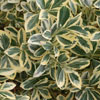
This is an evergreen shrub that stands out because of its young leaves, which have a broad central blotch of bright yellow that gradually turns creamy white. Being upright and bushy, it's typically grown as a hedge, especially in seaside gardens, or as a well-clipped specimen in long borders where it makes an effective divider.
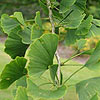
Ginkgo biloba Maidenhair tree
This deciduous conifer is one of the best known examples of a living fossil, remaining unchanged for millions of years. It is grown for its attractive shape and the curious fan-shaped leaves which turn yellow in autumn. Female trees produce small plum-like fruits with rancid flesh, though the kernels are edible.The nut-like gametophytes found inside the seeds are a traditional Chinese food and are believed to have health benefits. Ginkgos rarely suffer disease problems and are attacked by few insects, making this an excellent urban street tree.
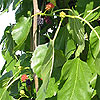
Morus alba 'Pendula' Mulberry
A nice variation on the species parent, 'Pendula' makes a much shorter, weeping form ideal for smaller gardens. Like the parent, it produces raspberry-like fruit, except these turn from white to pink and red in late summer, but if you want delicious fruit, M. nigra is first choice every time. Shelter from cold, drying winds is crucial. Prune trees in late autumn or early winter because the trees will bleed at other times of the year.
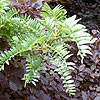
Gleditsia triacanthos 'Sunburst' Honey locust
Honey locusts are striking trees, mainly from North America, often planted for contrast against darker green backgrounds, which highlight the golden foliage in autumn. The species is an open airy tree, particularly attractive in late summer when decked out with its flat, slightly twisted seedpods, but it is a tree to approach with respect because of the long spines which arm its branches. 'Sunburst' is a thornless fast-growing variety, with fern-like bright yellowish-green leaves which stand out clearly against the darker older foliage. Also known as 'Aurea'. The Royal Horticultural Society has given it its prestigious Award of Garden Merit (AGM).
Pinus densiflora 'Alice Verkade' Japanese red pine
A small bright green dome with packed-tight needles, 'Alice Verkade' is initially slow growing, reaching just 90cm high and wide after ten years, but eventually it will spread out and reach head height. Grow it in a rock garden, and move it out when it gets too big, replacing it with another young one. Good alternatives include 'Jane Kluis' and 'Low Grow', the latter verging on yellow-green.
To view the panoramic image, click on the garden with your mouse and drag it around the picture. To find out about the planting hotspots in the garden, click on the leaf icon above. To start and stop the audio commentary click on the speaker icon.
If you're having problems viewing the panoramic images read our help page. Alternatively, take a look at our still photography of all of the show gardens.
"The garden has been designed to show the power singular colours can have in a garden. In this scheme, I challenged myself to use just the two raw horticultural colours of gold and green. I realise the limitations this provides in terms of plant selection and design, but believe the combination will add an interesting dimension, accentuating the foliage and flowers in full sunlight as well as under darker skies."
David Domoney - designer of the Croft Spot garden
Discover which garden the public voted their favourite in this year's BBC RHS People's Award.









 "The garden has been designed to show the power singular colours can have in a garden. In this scheme, I challenged myself to use just the two raw horticultural colours of gold and green. I realise the limitations this provides in terms of plant selection and design, but believe the combination will add an interesting dimension, accentuating the foliage and flowers in full sunlight as well as under darker skies."


