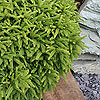
This cultivar is a good choice for a large rockery because it doesn't have one leading, vertical shoot but makes a rounded, bushy shrub. In time it spreads, making effective ground cover. The nigra part of the name refers to its leaves, which are darker than the species parent, though the new spring growth is light green. It contrasts well with tall, pencil thin Italian cypresses (Cupressus sempervirens). Though not widely sold, 'Pumila Nigra' can be found at specialist nurseries. One for the conifer collector.
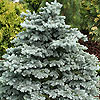
Picea pungens 'Globosa' Colorado Blue Spruce
A slow-growing spruce that'll take 10 years to hit 75cm high, it makes a wonderful mound of bobbly blue growth with tightly packed branches heading off in all directions. The needles colour-up best in full sun, and the effect is sensational in spring when the silver-blue new growth shoots out. Contrast with a foreground planting of heathers, or with vertical conifers. Other good pungens cultivars include the North American 'Montgomery' and Glauca Group. It has been given the Award of Garden Merit by the RHS.
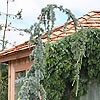
Cedrus atlantica 'Glauca Pendula'
This is a weeping conifer with bluish needles, which left to its own devices makes a sprawling spread, but start training it and the results can be superb. It can be sent up a vertical post, and then left to arch up and down, creating a shaggy, hunch-backed witch, or used as ground cover or tied to a formal arch, with one growing at either side. Once settled, it's a fast grower.
Juniperus x pfizeriana 'Carbery Gold' Juniperus
A low-spreading, creamy yellow conifer, it creates a flash of evergreen making excellent groundcover in a wild garden. It also makes a big impact in a large rock garden. Highlight the bright colour (best on the new spring growth) by using a dark green yew in the background. 'Golden Saucer' is a good alternative, and both can be pruned for shape and to make sure they don't spread too far. Specialist conifer nurseries should carry a wide range of cultivars.
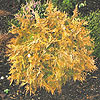
Thuja occidentalis 'Rheingold' White cedar
A neat small conifer, this makes a compact, squat-conical shape with rather stringy textured foliage which, in summer, is brassy-gold. In late spring, the new growth adds pinkish-bronze highlights, especially towards the top of the plant and, in winter, the foliage becomes strongly orange-toned. Its good colour, shape and size make it useful in smaller gardens as a feature plant. It combines well with shrubs that are at their most colourful from autumn to early spring, including witch hazel and winter-flowering heathers. The Royal Horticultural Society has given it its prestigious Award of Garden Merit (AGM).
To view the panoramic image, click on the garden with your mouse and drag it around the picture. To find out about the planting hotspots in the garden, click on the leaf icon above. To start and stop the audio commentary click on the speaker icon.
If you're having problems viewing the panoramic images read our help page. Alternatively, take a look at our still photography of all of the show gardens.
"Designing a garden using only conifers within the planting scheme seems like a hard task but it was the greatest of pleasures. Having so many colours, shapes and textures to work with along with the versatility of the plants allowed me to demonstrate what beautiful plants conifers truly are."
Roger Griffin - designer of the Cedrus and Friends garden
Discover which garden the public voted their favourite in this year's BBC RHS People's Award.










 "Designing a garden using only conifers within the planting scheme seems like a hard task but it was the greatest of pleasures. Having so many colours, shapes and textures to work with along with the versatility of the plants allowed me to demonstrate what beautiful plants conifers truly are."


