Michael Vout and Chris Jones, Telford & Wrekin Council
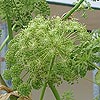
Angelica archangelica Angelica
This is a majestic plant that deserves a prominent position at the back of a border or in a wild part of the garden. It loves woodland conditions, with plenty of moist shade. All parts of the aromatic plant have culinary or medicinal uses, but it is best known for its candied stems, used as a cake decoration. In their first year, plants produce leafy bushes, and then die down and disappear completely from sight in winter in their second year they reach full size, and if prevented from flowering and seeding can survive for several years.
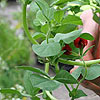
Lotus tetragonolobus Asparagus pea
This sprawling, bushy Mediterranean annual is grown for its pretty red flowers and edible, four-winged pods. The young pods ripen in July/August and have the mild flavour and consistency of asparagus. Don't eat pods larger than 2.5cm (1in), which are tough and unpalatable. Plants can be grown in pots or modules and planted out after the last frosts. Leave the roots in the soil after harvesting as they give a boost of nitrogen to brassicas during the next season. The asparagus pea also makes attractive ground cover in floral borders.
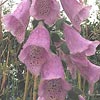
Digitalis purpurea Foxglove
This native European woodland plant appears in many guises, some dwarf and others very tall, with flowers in shades of pink and red - a white form is also available, and other species contribute yellow or rusty brown shades to the range. These blooms are attractive to bees. It is a popular biennial for shaded places, perennial if the flower stems are cut back promptly to prevent seeding. Otherwise plants seed themselves freely, and the seedlings can be transplanted if they are in the way. It is handsome and easy if watered well in dry weather, and looks spectacular at the back of a border.
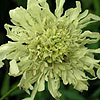
Cephalaria gigantea Giant scabious
Although it needs a large border, the giant scabious always attracts attention with its unusual 5cm (2in) wide, primrose yellow, rosette-like flowers. These tend to weigh down the tips of the wiry stems, giving the plant an informal look that is just right for a cottage garden. The plant also looks good at the back of a big herbaceous border, among large shrubs or trees in a mixed border, or in a light woodland clearing. In a well sheltered location it is self supporting, but in windier gardens it benefits from a tripod of rustic poles or bean poles.
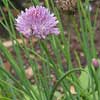
Allium schoenoprasum Chives
Chives are popular perennial bulbs that spread to form neat tufted clumps, ideal for edging beds and paths, and particularly attractive when in flower. Regularly harvesting the tops of the pleasantly onion-flavoured leaves, used to flavour all kinds of dishes, also helps to stimulate further new young growth, which has the best flavour. The attractive flowers, mauve in rounded heads, are edible, make a pretty garnish, and are a favourite of bees and other pollinating insects. Chives are easily raised from seed, or a bought potful may be divided for growing on to produce several strong clumps.
To view the panoramic image, click on the garden with your mouse and drag it around the picture. To find out about the planting hotspots in the garden, click on the leaf icon. To watch a video about the architectural features in the garden, click on the arrow icon.
If you're having problems viewing the panoramic images, take a look at our still photography of all of the show gardens.
"The inspiration of the garden is Thomas Telford. It is about celebrating the 250th anniversary of his birth and using his designs of toll houses as a way of expressing the man and his work.
"The garden features a toll house, gate and section of highway and is split into two areas; the ordered interior Toll House garden itself and the 'natural' landscape beyond the garden fence. There is a beautifully managed vegetable garden and an ornamental garden of herbaceous plants. The 'natural' landscape beyond is composed of wildflower meadows backed by woodland hedging.
"The style is not excessively elaborate and not overtly 'designed'. It has stylistic associations with cottage gardens and smallholdings but is distinctly different as its purpose is to serve the highway and is part of the industrial age."









 Watch a video tour
 "The inspiration of the garden is Thomas Telford. It is about celebrating the 250th anniversary of his birth and using his designs of toll houses as a way of expressing the man and his work.


