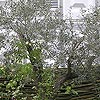
Attractive, slow-growing evergreen tree of Mediterranean origin. It forms an rounded head of small, silver-grey leaves and is tolerant of hot, dry conditions. The tiny creamy-white flowers, which are produced in summer are small and insignificant. These are followed by small, round green fruit that ripen to black. In the mediterranean they are cultivated widely for their fruits. In the Uk they are not fully hardy and require a warm, sheltered spot to thrive. Alternatively grow in a large pot and move into the shelter of a cool greenhouse over the winter months.
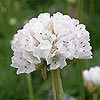
Armeria maritima 'Alba' Sea thrift
Sea thrift is widely found on seashores in the northern hemisphere, and makes very good ground cover in summer with its clumps of dark green foliage. It has a nice covering of small white flowers from the end of spring to summer, though you needn't stick to this one cultivar. Mix 'Alba' with the dark red 'Bloodstone' and the light pink 'Vindictive, which has won the Royal Horticultural Society's Award of Garden Merit (AGM), to form a patchwork quilt. A good choice for coastal gardens with average to poor soil.
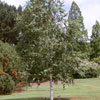
Betula utilis var jacquemontii 'Jermyns' Himalayan birch
A favourite multi-purpose tree, this betula cultivar is a vigorous tree that is grown for its snowy white bark. It looks stunning all year round, but especially on grey winter days when it really stands out in the bare garden. In early spring, the tree produces yellow-brown catkins that can be over 15cm (6in) in length. Avoid growing on poor chalky soil as this can make the leaves turn yellow and sickly.
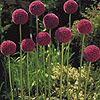
Allium giganteum Ornamental onion
This beautiful ornamental onion produces dense heads of lilac-pink, star-shaped flowers in summer. Its tall stems make it ideal for planting among lower-growing perennials where it can add an extra dimension to your planting. The Royal Horticultural Society has given the plant its prestigious Award of Garden Merit (AGM) which is for plants of outstanding excellence. Plant the bulbs 5cm to 10cm (2in to 4in) deep in autumn.
Hyacinthoides non-scripta Bluebell
Our familiar native fragrant bluebell or wild hyacinth has had several name changes, at various times masquerading as a scilla, hyacinthus or endymion. This instability has done nothing to reduce its status in everyone's affections, for it is the archetypal bulb for planting and gathering en masse - when bluebells are in flower, spring has truly arrived. There are charming pink and white varieties, but the blue ones capture the imagination most, especially when planted in drifts under shrubs and trees, and in patches of grass.
To view the panoramic image, click on the garden with your mouse and drag it around the picture. To find out about the planting hotspots in the garden, click on the leaf icon. To watch a video about the architectural features in the garden, click on the arrow icon.
If you're having problems viewing the panoramic images, take a look at our still photography of all of the show gardens.
"We wanted to try something different to our very stylised garden entry last year, and looked at the type of garden we think we do best - a traditional Yorkshire garden utilising our plant collections and parks and estate plants.
"We knew the garden will be recreated in two parks in Leeds, where there are clear signs of Roman archaeology, so the theme developed in my mind.
The Leeds Thackray Medical Museum has a wealth of knowledge on Roman medicine and herbs so we incorporated traditional herbs and Roman-introduced vegetables. With all these ideas coming together we felt the Roman Goddess Fortuna must be guiding us to enter this garden and will guide the judges to award us a high honour. Leodis - pro vita et amore!"
Denise Preston, Leeds City Council - chief recreation officer









 Watch a video tour
 "We wanted to try something different to our very stylised garden entry last year, and looked at the type of garden we think we do best - a traditional Yorkshire garden utilising our plant collections and parks and estate plants.


