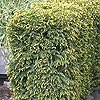
Yew is a native British evergreen, whose wood was once used for making longbows. Young plants are bushy and, if left unclipped, they eventually grow into large trees almost as wide as they are tall. However they are rarely allowed to grow naturally, being a firm favourite for classic style hedges and topiary. The plants withstand quite hard clipping and, if overgrown, can be rejuvenated by cutting them back to the stumps. The are also quite amenable to growing conditions and will grow in any well-drained soil. To propagate, take cuttings in late summer and early autumn. The Royal Horticultural Society have given it their prestigious Award of Garden Merit.
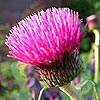
Although it's related to the garden thistles that gardeners strive so hard to get rid of, 'Atropurpureum' is a tall statuesque plant that is perfect for the herbaceous border. It produces elegant, long, leafless stems, each topped with a huge magenta-pink thistle head. It's a useful plant for the back of the border but can also be planted at the front as an accent plant, because other plants can be viewed through its stems. Plant in any fertile, well-drained, slightly acidic soil in full sun.
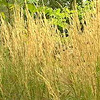
Calamagrostis x acutiflora 'Karl Foerster' Feather reed grass
One of the best upright growing grasses that forms a stiff clump. It's easy to grow and is tolerant of most soil conditions, although its size is usually determined by the amount of moisture in the soil. In summer it produces tall flowerheads that start off pale green and gradually turn bright golden yellow. These move in the breeze and last into the winter months.
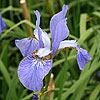
Iris sibirica 'Papillon' Siberian iris
The pale blue flowers of this gorgeous iris brighten up the garden from mid- to late spring. Plants enjoy a sunny or partially shaded spot in moist but well-drained, acid to neutral soil. To propagate, divide plants from mid-summer to early autumn.
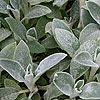
Stachys byzantina 'Silver Carpet' Lambs' ears
This variety of the well-known ground-covering perennial plant features oval, woolly, grey leaves, but differs from other stachys types in that it rarely flowers. It's evergreen, which makes it an extremely useful front-of-border, mat-forming plant for year-round interest. The plant is also reasonably drought-tolerant, so will be happy in a dry, sunny site, or gravel garden.
To view the panoramic image, click on the garden with your mouse and drag it around the picture. To find out about the planting hotspots in the garden, click on the leaf icon. To watch a video about the architectural features in the garden, click on the arrow icon.
If you're having problems viewing the panoramic images, take a look at our still photography of all of the show gardens.
"The garden represents an imaginary concept for an open space in an urban setting, showcasing the latest environmental technologies and how they can sustain and enhance a garden.
"The focus is the Urban Oasis sculpture which harnesses daylight and windpower to recycle water. The sculpture mimics the design of an emerging flower: its 'petals' are linked to moisture sensors and are triggered to open when the garden is dry. The petals then convert sunlight to electricity for pumping water around the garden. The design promotes an understanding of conservation and the use of natural resources."









 Watch a video tour
 "The garden represents an imaginary concept for an open space in an urban setting, showcasing the latest environmental technologies and how they can sustain and enhance a garden.


