Ulf Nordjfell, The National Linnaeus Tercentenary Committee
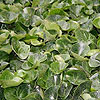
Asarum europaeum Asarabacca
A strange, yet interesting creeping perennial for shady spots in rock or woodland gardens. It has dark green, kidney-shaped leaves and solitary, purplish-brown, drooping, bell-shaped flowers in summer. The plant was once much grown for its purgative and emetic properties and also used as an ingredient in snuff.
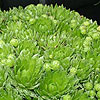
Jovibarba sobolifera Hens and chickens houseleek
Closely related to sempervivums or houseleeks, these evergreen plants thrive in poor, dry, gritty soil. They can be grown successfully on roofs, walls and in rock gardens. Their structure: rosettes of succulent leaves which cover the growing surface with a clustered carpet of plants, makes them very drought tolerant. The leaves are shiny green with red tips, which creates a tapestry-like effect when seen en masse.
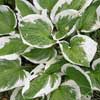
Hosta 'Patriot' Plantain lily
'Patriot' is arguably the best white-edged hosta. A sport of 'Francee', it has mid-green leaves with much wider white margins. A real stunner for the border or shady patio. Hostas benefit from plenty of organic matter being added to the soil before planting. They also enjoy being mulched in spring and autumn to help retain moisture in the soil. For the lushest displays, feed with a balanced fertiliser between March and June. Do not feed after this period or you will encourage the sort of sappy growth that slugs adore! To avoid the leaves looking like a piece of lace, take measures against slugs and snails, such as beer traps.
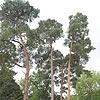
Pinus sylvestris Scots pine
This is a very elegant, broad, cone-shaped, blue-green conifer with long twisted needles hanging in clusters all over the branches. When young, the tree has foliage right down to the ground but as it gets older and the broad top of the tree shades the base, the lower branches need to be removed. It needs quite a large garden to accommodate it, but is a very beautiful tree given enough room. It is best grown as an isolated specimen in grass. It has been given an Award of Garden Merit, which is for plants of outstanding excellence.
Malus 'Evereste' Crab apple
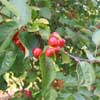
This beautiful crab apple is covered with white flowers in spring. The flowers open from red buds. In autumn, it gives another show. At this time, the tree is covered in red-flushed, orange- yellow fruits. 'Evereste' is an excellent tree for smaller gardens and it has a pleasant conical shape.
To view the panoramic image, click on the garden with your mouse and drag it around the picture. To find out about the planting hotspots in the garden, click on the leaf icon. To watch a video about the architectural features in the garden, click on the arrow icon.
If you're having problems viewing the panoramic images, take a look at our still photography of all of the show gardens.
"I drew my inspiration from Carl Linnaeus. The garden is a contemporary design; it celebrates both modern interpretation and traditional values in architecture and design.
"The garden does not mimic nature but refers to its many different characteristics: for instance the source of water in a dark woodland tarn and the violent flow of water as it rushes over native Swedish cobbles.
"A trademark Linnaean plant used is Linnaea borealis, a Swedish wild plant with a beautiful scent. Linnaeus took the flower as his own personal symbol when he was raised to the Swedish nobility in 1757. It's planted in carved holes in the rounded blocks of granite, inspired by the form of a millstone."









 Watch a video tour
 "I drew my inspiration from Carl Linnaeus. The garden is a contemporary design; it celebrates both modern interpretation and traditional values in architecture and design.


