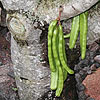
The carob tree comes from the Middle East and thrives in difficult conditions, growing in poor soil, withstanding high temperatures and with a deep tap root to help it survive periods of drought. It has spread around the world, growing wherever the climate is suitable. A tree can start to produce fruit from between six to fifteen years old and can continue until it's 100. The fruits are pods up to 30cm long and unusually grow directly out of older branches and the main stems of the tree. The seeds are used as a substitute for chocolate.
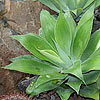
Agave attenuata Swan's neck agave
A succulent perennial with a thick stem, supporting a rosette of attractive, sword-shaped, pale blue-grey leaves. It only flowers once, producing a tall spike of yellow-white flowers on a curving stem which gives the plant its common name swan's neck agave. As soon as it flowers, the plant dies, but this is not normally until it has reached full maturity which could be 8 or 10 years, and it usually produces small, new plants from side shoots. Since it is tender, it does need to be in a frost-free, sunny, sheltered spot, if grown in open ground. Otherwise grow it outside in a pot during the summer months, placing inside over the winter months. Smaller plants may be grown as houseplants.
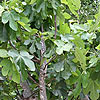
Ficus carica Fig
Figs are native trees of Syria and Persia, and have been grown in Britain since Roman times. Although the species doesn't offer a reliable fruit crop in the UK, its still worth growing for its striking, lobed foliage. Give your fig the shelter of a warm wall. For fruits, try growing one of the cultivars, such as 'Brown Turkey'.
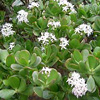
Crassula ovata Jade tree
One of Anne Swithinbank's favourite succulents, the jade tree makes a long-lived, easy to grow houseplant. It has glossy, fleshy leaves and forms a tree-like plant. Star-shaped white flowers appear in autumn. A native of South Africa, it needs to be grown in free-draining compost in a sunny position. Water moderately and feed monthly when in growth keep just moist during winter.
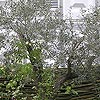
Olea europaea Olive
Attractive, slow-growing evergreen tree of Mediterranean origin. It forms an rounded head of small, silver-grey leaves and is tolerant of hot, dry conditions. The tiny creamy-white flowers, which are produced in summer are small and insignificant. These are followed by small, round green fruit that ripen to black. In the mediterranean they are cultivated widely for their fruits. In the Uk they are not fully hardy and require a warm, sheltered spot to thrive. Alternatively grow in a large pot and move into the shelter of a cool greenhouse over the winter months.
To view the panoramic image, click on the garden with your mouse and drag it around the picture. To find out about the planting hotspots in the garden, click on the leaf icon. To watch a video about the architectural features in the garden, click on the arrow icon.
If you're having problems viewing the panoramic images, take a look at our still photography of all of the show gardens.
"I have always been interested in the concept of the solar system, the wider universe and how our planet originated. I originally considered the project for the millennium Chelsea Flower Show with a view to the next millennium and a vision of what our future holds as a species. I have been inspired by volcanic landscapes around the world which exhibit a form of brutal architecture, emphasising the volatile yet symbiotic relationship between man and his environment. I am also fascinated by the balance between aesthetics and science and this has been a real challenge."









 Watch a video tour
 "I have always been interested in the concept of the solar system, the wider universe and how our planet originated. I originally considered the project for the millennium Chelsea Flower Show with a view to the next millennium and a vision of what our future holds as a species. I have been inspired by volcanic landscapes around the world which exhibit a form of brutal architecture, emphasising the volatile yet symbiotic relationship between man and his environment. I am also fascinated by the balance between aesthetics and science and this has been a real challenge."


