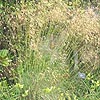
This is a very striking evergreen grass that forms a spiky clump of arching deep green foliage from which a huge sheaf of very long-stemmed, oat-like flower-heads erupts in mid-summer, up to 1.8m (6ft) high. When mature, these splay apart to make a wide fountain shape that almost hides the plant. The seed-heads dry out naturally on the plant and persist into early winter, where they make a good architectural feature, especially when outlined in frost. This is an excellent alternative to pampas grass as a lawn specimen in small gardens, and perfect in a border or a gravel garden. It is found growing wild in Spain and Portugal. To propagate, divide plants from mid-spring to early summer. The Royal Horticultural Society has given it their prestigious Award of Garden Merit (AGM).
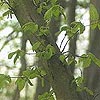
Carpinus betulus Hornbeam
Similar in appearance to beech, hornbeam makes a superb specimen tree or hedging plant. Grown as a tree, it has a pyramidal shape that later becomes more rounded. As a formal hedge it requires clipping once a year in mid- to late summer to keep it looking tidy. Although it is deciduous, it retains its coppery dead leaves throughout the winter so it remains an effective screen. Green catkins appear in spring and winged nuts develop in autumn.
Although it's related to the garden thistles that gardeners strive so hard to get rid of, 'Atropurpureum' is a tall statuesque plant that is perfect for the herbaceous border. It produces elegant, long, leafless stems, each topped with a huge magenta-pink thistle head. It's a useful plant for the back of the border but can also be planted at the front as an accent plant, because other plants can be viewed through its stems. Plant in any fertile, well-drained, slightly acidic soil in full sun.
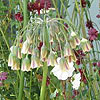
Nectaroscordum siculum Ornamental onion
A very fine species with large, nodding umbels of white or cream flowers, flushed pink or purplish red, and tinted green at the base. Seed pods become erect as flowers fade. Try it in a gravel garden where it will love the well-drained conditions and self-seed happily. To create a bold effect, plant it at the front of the border, where other plants can be seen though its stems. The seed heads dry well and can be used in dried flower arrangements.
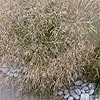
Deschampsia cespitosa Tussock grass
This is a spectacular fountain-shaped grass, with tall sprays of silver-tinted purple flower-heads erupting from evergreen foliage. The seed-heads persist well into winter and turn bronze-brown with age. They are good for cutting to dry for winter flower arrangements, but also look attractive in the garden when rimed with frost. Since it thrives in light shade, this is a good grass to grow in borders between shrubs and perennials, and also looks good teamed with foliage plants such as hostas and hardy ferns.
To view the panoramic image, click on the garden with your mouse and drag it around the picture. To find out about the planting hotspots in the garden, click on the leaf icon. To watch a video about the architectural features in the garden, click on the arrow icon.
If you're having problems viewing the panoramic images, take a look at our still photography of all of the show gardens.
"Initially, inspiration came not from thinking about a setting, place or someone else's garden but in the form of shape and simplicity. The essence of the Scandinavian landscape was injected into the design which helps the style, form and planting pull together. Uncluttered designs always work better, I tried to keep to this philosophy on this, my first Chelsea garden."
Stuart Perry - designer of These Four Walls
Vote now for your favourite garden in the BBC RHS People's Award.










 "Initially, inspiration came not from thinking about a setting, place or someone else's garden but in the form of shape and simplicity. The essence of the Scandinavian landscape was injected into the design which helps the style, form and planting pull together. Uncluttered designs always work better, I tried to keep to this philosophy on this, my first Chelsea garden."


