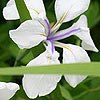
Found growing in Japan in 1900, it is now a big seller. The flower has clear white petals in midsummer, greenish yellow at the base, that are nicely held above the soft green leaves. It is one of the most popular forms. It will thrive in most damp soils, and looks especially good planted next to a pond.
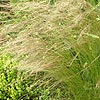
Stipa tenuissima Feather grass
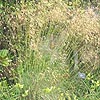
A neat, compact, perennial grass, this has lots of close-packed, stiff, thread-like stems forming a strongly horizontal shape about 60cm (2ft) tall. In summer, plants are covered with masses of elegant pale feathery seed-heads which are held a little above the foliage. These can be cut and dried when first opened for use in winter arrangements indoors. Alternatively they make a useful winter food source for finches and other seed-eating birds. Plants like a sunny well-drained spot and associate well with compact alstroemerias, rock plants and other grasses that enjoy similar growing conditions. To propagate, divide plants from mid-spring to early summer.
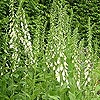
Digitalis purpurea 'Albiflora' Foxglove
Foxglove is a common favourite, and 'Albiflora' is no exception. This cultivar produces elegant spires of white tubular flowers in June, which are enjoyed by bees throughout the summer. For the best displays, it should be grown annually from seed. Sow in late spring where you want it to flower for blooms the following year. It will grow in virtually any soil as long as it is not very wet or very dry. All parts of the plant cause severe discomfort if ingested. Use gloves when handling the plant as the foliage can irritate the skin.
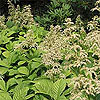
Rodgersia pinnata 'Superba' Rodgersia
Rodgersias are striking plants for a damp border in light shade. Most large, summer-flowering plants for a damp soil need full sun. This variety has good foliage with large, deep green, textured leaves that have a distinctive pinkish-bronze colouring when young. In mid-summer, tall pyramidal plumes of feathery pink flowers are held well above the foliage. The plants are useful for growing towards the back of a moist border or behind a pond, where they are partly shaded by other tall plants. The Royal Horticltural Society have given it their prestigious Award of Garden Merit (AGM), in recognition of its outstanding excellence.
Stipa gigantea Giant feather grass
This is a very striking evergreen grass that forms a spiky clump of arching deep green foliage from which a huge sheaf of very long-stemmed, oat-like flower-heads erupts in mid-summer, up to 1.8m (6ft) high. When mature, these splay apart to make a wide fountain shape that almost hides the plant. The seed-heads dry out naturally on the plant and persist into early winter, where they make a good architectural feature, especially when outlined in frost. This is an excellent alternative to pampas grass as a lawn specimen in small gardens, and perfect in a border or a gravel garden. It is found growing wild in Spain and Portugal. To propagate, divide plants from mid-spring to early summer. The Royal Horticultural Society has given it their prestigious Award of Garden Merit (AGM).
To view the panoramic image, click on the garden with your mouse and drag it around the picture. To find out about the planting hotspots in the garden, click on the leaf icon. To watch a video about the architectural features in the garden, click on the arrow icon.
If you're having problems viewing the panoramic images, take a look at our still photography of all of the show gardens.
"Inspiration for the garden is drawn from a study of the modernist architecture of the Farnsworth House designed by Ludvig Mies van der Rohe in Plano, Illinois, USA. Here the landscape and the architecture work in balance, but it's a balance created through contrast and context. These principals inspired us to design a garden with bold, geometric and contemporary themes focusing on contrast and context."
Marcus Barnett - co-designer of The Savills Garden
Vote now for your favourite garden in the BBC RHS People's Award.









 "Inspiration for the garden is drawn from a study of the modernist architecture of the Farnsworth House designed by Ludvig Mies van der Rohe in Plano, Illinois, USA. Here the landscape and the architecture work in balance, but it's a balance created through contrast and context. These principals inspired us to design a garden with bold, geometric and contemporary themes focusing on contrast and context."


