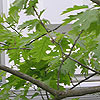
A giant of an oak from North America, capable of topping 30m (100ft), though you will have to wait decades for it to get that high. The leaves are greenish on the top side with a bluish tinge below, but they really flare up in the autumn when they turn red before falling. A good alternative for part shade is the variety 'Aurea' which grows half as high, with yellow spring leaves. It has been given the Award of Garden Merit (AGM) by the Royal Horticultural Society.
Rhus typhina Stag's horn sumach
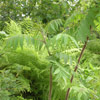
The North American stag's horn sumach, grown in gardens for over 350 years, is spectacular in autumn when its foliage turns fiery orange, gold, scarlet or purple The effect is greater when set against the dense cones of red fruit borne by female plants. It is prone to producing suckers but these can be mown off in lawns, or plants may be grown in large tubs. When dug up rooted suckers are an easy way to propagate new plants.
Geranium maculatum Cranesbill
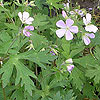
A North American geranium which stands up rather than flopping, and has clusters of white centred, pale to dark pink flowers. They open in late spring, and again in summer, and with luck even in the autumn. Make sure that is in damp soil, possibly near a natural stream, in a prominent position. 'Beth Chatto' and 'Espresso' are excellent alternatives, both of which have been given the Award of Garden Merit (AGM) by the Royal Horticultural Society.
Polygonatum x hybridum Common Solomon's seal
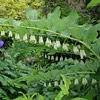
Solomon's seal is an old cottage garden plant that appears early in spring, producing graceful, arching stems with precisely paired, oval leaves along their length. These are quickly joined by dangling, green-tipped, white bells that persist throughout late spring and early summer. Plants enjoy woodland conditions, and associate well in a cool, shady, humus-rich border with spring flowers such as corydalis and dicentra. Stems and foliage remain eye-catching even after the flowers are over. Solomon's seal also looks superb with hardy ferns to create a combination that lasts all summer. The Royal Horticultural Society has given it its prestigious Award of Garden Merit.
Podophyllum peltatum American mandrake
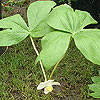
The mandrake is a good choice for a shady position (even dryish shade), right at the front of a border or in a wild part of the garden. It has three assets; the leaves are glossy and long, nearly reaching 30cm (12in); the single white to pale pink flowers are gently scented, linking spring and summer; and they are followed by edible fruit. Not exactly a frequent sight in most nurseries, but quite a few specialists now stock it.
To view the panoramic image, click on the garden with your mouse and drag it around the picture. To find out about the planting hotspots in the garden, click on the leaf icon. To watch a video about the architectural features in the garden, click on the arrow icon.
If you're having problems viewing the panoramic images, take a look at our still photography of all of the show gardens.
"The Lake Michigan Ravine ecosystem, like many of the great natural landscapes in the United States, is a work of art in its own right. As a garden designer, the challenge of interpreting this stunning landscape within the confines of a Chelsea Show Garden is a wonderful opportunity.
"As a global citizen, the realization of this garden has allowed me to remind a world-wide audience of the importance of preserving the invaluable diversity of life through our representation of this one small piece of our planet."
Catharina Malmberg Snodgrass - co-designer of The Ravine Garden
Vote now for your favourite garden in the BBC RHS People's Award.









 "The Lake Michigan Ravine ecosystem, like many of the great natural landscapes in the United States, is a work of art in its own right. As a garden designer, the challenge of interpreting this stunning landscape within the confines of a Chelsea Show Garden is a wonderful opportunity.


