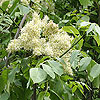
It makes a perfectly decent, bushy, deciduous tree which doesn't get outrageously tall. It has dark green leaves but stands out in late spring and early summer when it has lashings of gently scented, creamy white flowers. Even better, the leaves turn deep dark purple red in autumn. Large and fast growing; most soils and situations, including coasts and cities, are fine.
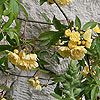
Rosa banksiae 'Lutea' Banksian rose
A highly impressive, vigorous climbing rose with green-eyed, pale yellow double flowers that starts flowering early in summer, making up for its complete lack of scent. If you live an area with very cold winters and want a banksian rose, this is the one to get because it is the hardiest, though it will still need a warm, sunny, sheltered site. Make sure there is a dark background so that the colour stands out.
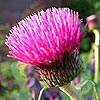
Although it's related to the garden thistles that gardeners strive so hard to get rid of, 'Atropurpureum' is a tall statuesque plant that is perfect for the herbaceous border. It produces elegant, long, leafless stems, each topped with a huge magenta-pink thistle head. It's a useful plant for the back of the border but can also be planted at the front as an accent plant, because other plants can be viewed through its stems. Plant in any fertile, well-drained, slightly acidic soil in full sun.
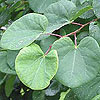
Cercis siliquastrum Judas tree
Leaves appear late on this spectacular flowering tree, after the startling clusters of pea-shaped blooms which can smother the tree and burst from the new young shoots, the surface of the bare branches and even the main trunk of the tree. To flower well it needs full sun and a long warm summer the previous year, and it is not so impressive in cooler gardens. From late summer onwards, large bunches of rich purple pods deck the branches and last well into winter, while the pretty foliage turns light yellow and chestnut in autumn. The Royal Hortcultural Society has given it its prestigious Award of Garden Merit (AGM).
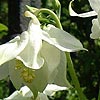
Aquilegia vulgaris Columbine
Charming, old-fashioned cottage garden plant with bonnet-shaped flowers, often two-tone and with long graceful spurs. Flowering in early summer, aquilegias fill the seasonal gap between the last of the spring bulbs and the first of the summer flowers. Self-sown aquilegias look charming naturalised amongst shrubs and roses. However, the plants interbreed freely and seedlings rarely resemble the parents. To keep chosen varieties pure, prevent self-seeding by deadheading shortly after flowering.
To view the panoramic image, click on the garden with your mouse and drag it around the picture. To find out about the planting hotspots in the garden, click on the leaf icon. To watch a video about the architectural features in the garden, click on the arrow icon.
If you're having problems viewing the panoramic images, take a look at our still photography of all of the show gardens.
"The garden is really about how a strongly-structured space can create a sense of exquisite tranquillity. No-one resting in the garden on a summer evening, amongst the subtle scents, colours and birdsong, would imagine the work involved in its creation; the back-breaking work of stone wallers, the hours of tending by gardeners. Yet this level of attention to detail is what permits this final, satisfying sense of deep relaxation."
Jinny Blom - designer of The Laurent Perrier Garden
Vote now for your favourite garden in the BBC RHS People's Award.









 "The garden is really about how a strongly-structured space can create a sense of exquisite tranquillity. No-one resting in the garden on a summer evening, amongst the subtle scents, colours and birdsong, would imagine the work involved in its creation; the back-breaking work of stone wallers, the hours of tending by gardeners. Yet this level of attention to detail is what permits this final, satisfying sense of deep relaxation."


