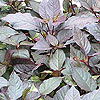
As tropical gardening has increased in popularity, so too has this striking, dark purple-leafed plant. It has vigorous, upright and spreading purple leaves and stems that arch over the edge of containers and are excellent when used as mid-height bedding in a summer border. The plant will grow in both sun and shade but it performs best and has darkest foliage in full sun. It can also be grown from seed: sow the seeds indoors about 10-12 weeks before the last frost date.
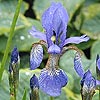
Iris sibirica Siberian iris
This graceful spring-flowering iris has rich purple blooms. Easy to grow, it enjoys a sunny or partially shaded spot in moist but well-drained, acid to neutral soil. To propagate, divide plants from mid-summer to early autumn. It makes a great planting partner for other moisture-loving plants, such as hostas and ligularia. For a bold effect plant it next to purple-leaved shrubs.
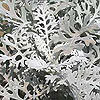
Senecio cineraria 'Silver Dust' Senecio
This tender shrub is usually grown as a half-hardy annual foliage plant. The young leaves of 'Silver Dust' are slightly lobed, a bit like oak leaves, but as the plants mature, they become deeply cut, much paler in colour and are covered in a silvery grey fleece. To encourage new basal growth, flowering should be prevented by regularly removing lengthening stems. They are easily raised from seed but, as borderline perennials, they often survive the winter in mild gardens and can be grown from cuttings.
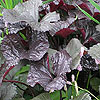
Ligularia 'Britt-Marie Crawford' Golden groundsel
An ideal plant for a damp border or beside a pond, 'Britt-Marie Crawford' produces elegant deep maroon foliage that is large and kidney-shaped. This is the perfect contrast to its flowers which are large, shaggy, narrow-petalled deep orange daisies which appear in loose, flat-topped sprays in mid-summer. It looks good planted in large drifts beside ponds, or makes an excellent focal point in a large border. Incorporate planty of organic matter before planting and mulch well in the spring, to prevent plants from drying out during hot weather.
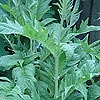
Cynara cardunculus Cardoon
An old Victorian favourite, once grown as a vegetable and blanched for use rather like celery, the cardoon is now valued for its striking silvery, thistle-like foliage which adds a theatrical touch to the border. In summer, tall flower stems are topped by fat thistle buds which resemble small globe artichokes - the plants are close cousins. The buds finally open into large purple thistles which attract lots of bees; the dead flower-heads can be left on the plants and will provide an attractive feature over the winter months. The Royal Horticultural Society have given it the Award of Garden Merit (AGM).
To view the panoramic image, click on the garden with your mouse and drag it around the picture. To find out about the planting hotspots in the garden, click on the leaf icon. To watch a video about the architectural features in the garden, click on the arrow icon.
If you're having problems viewing the panoramic images, take a look at our still photography of all of the show gardens.
"Melding the industrial wealth of bygone years with the recent resurgence of a major centre for retail and business, our garden takes its inspiration from the great city of Leeds.
"It reflects the success and prosperity of the city and highlights the important role parks and green spaces play in balancing architectural structures with green landscapes and places for recreation."
Denise Preston, Leeds Park and Countryside Services - The Leeds City Council Garden
Vote now for your favourite garden in the BBC RHS People's Award.









 "Melding the industrial wealth of bygone years with the recent resurgence of a major centre for retail and business, our garden takes its inspiration from the great city of Leeds.


