
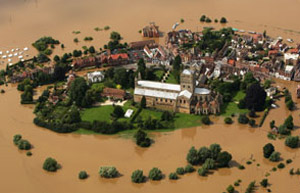
In recent years, the UK has been hit with some extreme wet weather. Find out what the experts are suggesting you can do to deal with the after-effects of heavy rain in your garden.
In recent years, the UK has been hit with some extreme wet weather. Find out what the experts are suggesting you can do to deal with the after-effects of heavy rain in your garden.
Severe floods across the country in recent years, particularly in 2007, has caused waterlogged soil and the loss of trees and plants for thousands of gardeners. As climate patterns change, heavier rainfall and erratic weather conditions are expected to continue.
Gardening presenter Alys Fowler suggests that all gardeners work to improve drainage by aerating the soil and planting trees and shrubs on a raised mound. "And I can't stress enough the importance of adding compost. The more compost that's in, the better the drainage and water holding capacity."
Shrubs and fruit trees are particularly vulnerable in waterlogged soil during the winter months, says Alys. Shrubs aren't able to put on new roots as quickly as perennials and cannot cope for long periods of time underneath water. Planting trees and shrubs on raised ground will help to improve drainage.
Alys also suggests that following a wet winter, vegetable gardeners should hold off from early sowing until the soil is dry enough.
In July 2007, Hidcote Manor was one of the gardens seriously affected by the extreme flooding. Glyn Jones, Head Gardener at Hidcote Manor, dealt with the aftermath of the rain. "With five inches of rain, the stream burst its banks and all the perennials in flower washed away." On the up side, gardeners and members of the community responded immediately.
Glyn believes every gardener learns from experience. He suggests using good, strong staking and to make sure water courses are always left open. "When paving patios, always remember to keep the fall of the patio away from the house and create beds and borders close to the house to improve drainage."
Sally Smith, Head of the Advisory Service at Garden Organic, is optimistic about the recovery of garden plants which have been under water for less than a week. However, to be on the safe side, she recommends taking cuttings. Plants that seem to have survived initially, may die off the following season from root damage.
Pruning ornamentals right back will also give plants a better chance of survival. "The less leafy green to support, the better." Sally suggests staying off wet ground for a while to reduce compaction, and sowing a green manure to help dry out the soil and restore nutrients.
When it comes to vegetables, it's important to know whether your soil is contaminated. If you're unsure, you can ring your local council for more information.
Sally recommends salvaging what you can in the vegetable patch. It's imperative that you wash your vegetables thoroughly before cooking with them. "If it's leafy vegetables, such as salad, which is eaten raw, it's probably best not to eat them at all." You could try re-sowing crops for a later harvest.
Even gardeners that escape actual flooding can suffer problems from prolonged rain, especially fruit and vegetable growers. Potato blight can be a common problem and Sally suggests digging potatoes up and storing them in a cool, dry place.
As flood waters subside, poorly-drained soils can lead to waterlogging. Few garden plants are able to cope with long periods in ground saturated with water. When soil is waterlogged, plants literally drown. Water fills all the air spaces between the soil particles and this prevents oxygen from reaching the roots. In turn, this causes the soil to stagnate and prevents root growth.
Find out more about waterlogging and what you can do to improve drainage in your garden. Learn more about using green manure and other organic methods to prevent flooding in the garden.
If you have any tips for other gardeners on how to deal with weather extremes, you can offer advice on the gardening message board.

BBC © 2014The BBC is not responsible for the content of external sites. Read more.
This page is best viewed in an up-to-date web browser with style sheets (CSS) enabled. While you will be able to view the content of this page in your current browser, you will not be able to get the full visual experience. Please consider upgrading your browser software or enabling style sheets (CSS) if you are able to do so.

