
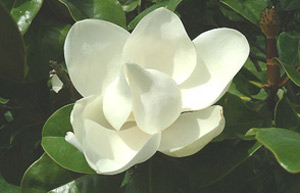
Propagating plants and shrubs by layering is an easy way of creating new plants for free. Follow our guide and share your favourite plants with friends and family.
Propagating plants and shrubs by layering is an easy way of creating new plants for free. Follow our guide and share your favourite plants with friends and family.
Layering is a simple form of propagation which consists of bending a low branch or shoot down to soil level, wounding the shoot and then covering this portion with soil to encourage it to root. It can then be severed from its parent to produce a new plant.
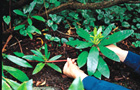
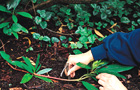
 A slight modification of the technique, called serpentine layering, can be used for climbing plants. Rather than using a single part of the shoot, several portions of a climbing plant's stem are covered with gritty soil, with the leaves or side shoots left uncovered.The covered portions are sometimes cut, but will often root with no special treatment.
 Air layering works in a very similar way to conventional layering, except that the plant shoot doesn't need to be buried in the ground to stimulate the production of new roots. By wounding the plant and then packing the wound with a bandage of moist compost (wrapped in polythene) the plant can be 'tricked' into producing new roots and ultimately, a new plant. This technique works particularly well on magnolias, rhododendrons and lilac, as well as houseplants such as rubber plants and bonsai.

BBC © 2014The BBC is not responsible for the content of external sites. Read more.
This page is best viewed in an up-to-date web browser with style sheets (CSS) enabled. While you will be able to view the content of this page in your current browser, you will not be able to get the full visual experience. Please consider upgrading your browser software or enabling style sheets (CSS) if you are able to do so.

