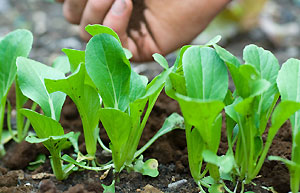
Late sowing
In September the ground is still warm enough for seeds to germinate quickly and with longer summers in some areas, the growing season often continues for a few bonus weeks. So it's a good time to try some late sowings. There's a good range of crops that can be sown right through to the end of the month and some even later.
Crops to try
Leafy vegetables
Decreasing light levels mean late sown vegetables won't flower and fruit, but leafy crops can put on plenty of growth in the time remaining.
Leaf varieties to sow outdoors include: pak choi (tatsoi) varieties, mizuna, winter cress, spicy oriental salad mixes and spinach varieties such as 'Giant Winter'. These should germinate quickly and give you plenty of supply for stir fries, soups and leafy salads through to the first frosts.
If you have a greenhouse or cold frame you can sow winter lettuce varieties under glass. 'Winter Density' is one of the most popular and produces lovely tender hearts of lettuce through the cold months.
Broad beans and peas
Early sowings of broad beans and peas can be carried out from late September through to mid November. The advantage of sowing early is that plants can establish over the winter and flower and fruit earlier. Many plants are able to withstand quite harsh conditions; however you may need to fleece young plants during hard frosts or snowy conditions. 'Super Aguadulce' and 'Aguadulce Claudia' are two broad bean varieties that suit early sowings. 'Feltham First' is the most popular pea for early sowings.
Garlic
Garlic can be planted from the autumn right through into February, providing the ground is not too hard or waterlogged.
Christmas potatoes
If you plant seed potatoes in September in a pot, you can grow a crop to serve with your festive turkey. The plants need to establish before the first frosts when they should be brought indoors to a sheltered spot. Keep watering and earthing up until December and dig up your crop of new potatoes on Christmas Eve.
Soil preparation
This is key to getting your vegetable garden ready for spring and replenishing the nutrients in your soil at the end of the growing season. If you have taken on a new allotment or are planning to start a vegetable garden next year, cover soil and weeds with black plastic or carpet through the winter months. This will suppress any growth and kill off remaining weeds. Alternatively, if your beds are clear, sow green manure of mustard seed or clover. This will keep free-ranging weed growth at bay and give you a nutritious crop to dig back in and enrich your soil.
Autumn is also a good time to add farmyard manure to bare soil. As long as you have no active growth in your beds, the manure doesn't have to be quite so well-rotted down. Spread a thick layer over beds to act as a deterrent to weeds while the winter frosts and snow break it down.
When spring comes round, you will be ready to dig over your beds and start planting your new crops into weed-free, fertile soil.