
I'm back in New York, en route to the Toronto Film Festival. The stifling summer heat of my last visit has given way to a lovely autumnal glow, and the mood here seems more sombre as the city reflects on the events of three years ago. I was in the States on 9/11/2001 too, not in New York but Los Angeles, to audience test My Little Eye, so to an extent I am thinking back to that time as well. We were grounded (unlike the Bin Ladens), trapped in the strangely unsettling calm of the Hotel Avalon in Hollywood watching events unfold in New York. But that's another story.
"IT'S BUSINESS AS USUAL IN NEW YORK"
I am here to work, something that seems perfectly acceptable in this busy, driven city whatever the mood or the weather. If citizens are inwardly reliving the events that forever transformed their beloved skyline along with their world view, outwardly they seem as busy as ever, chasing the buck and the dream. The crowds may be heading for Ground Zero to commemorate their loss, but the street sellers are still selling pretzels and hot dogs and the NYPD cycling team are heading off on the Staten Island Ferry to some race or other. It's business as usual in New York and the streets give off steam under the strain of it all. The city's energy is undiminished and it's what draws people to it like a magnet.
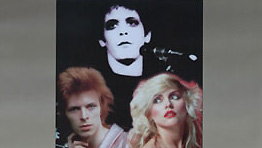 It's what brought John Cale here from Wales in 1962 to form The Velvet Undeground with Lou Reed. He, up until now, has been my primary link with the city (contributing music to House Of America and Beautiful Mistake as well as performing in Still:Here/Now). This time I am here to see another Brit who was also inexorably drawn towards this bustling pop-art metropolis: Mick Rock. If you don't recognise his name, you might know his work. It overlaps with that of John Cale's as well as David Bowie, Lou Reed, Debbie Harry, and Iggy Pop.
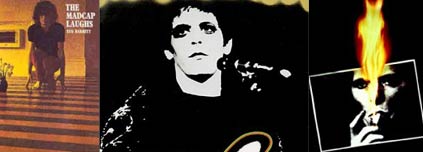
The bleached-out image of Lou Reed with mascara and guitar staring out from the cover of the Transformer album? That's one of Mick's photographs. One of many that he took chronicling the journey that music took from Glam to Punk. He is the rock photographer most associated with those heady times, and all that troubled, glittering talent. He was a courtesan of Camp.
Mick's photographic career started almost accidentally, taking pictures of Syd Barrett, the troubled Pink Floyd frontman back in 1969, and it was obvious from the beginning that he had the ability to capture the essence of people with his lens. Those images of an otherworldly poet lost in another world, which became the cover to his The Madcap Laughs album, are still haunting. But 1972 was Mick's annus mirabilis, for this was the year that David Bowie - a man on a mission - became Ziggy Stardust.
Small clusters of boys wearing eye-liner and pale long-haired girls all gathered to watch Ziggy play guitar. He wasn't famous yet but he was already a superstar in his own head, and Mick was there to photograph him. "Nice name," David said to him backstage on their first encounter, "and it's your real one." David Bowie had started life as David Jones but Mick Rock had been christened Michael Rock, so perhaps he was destined to be a rock photographer. Anyway, a friendship blossomed between the two South London boys, Mick became David's collaborator and a remarkable journey began which landed them both in New York.
"COCAINE WAS THE FUEL FOR THIS MANIC ENERGY"
And that's where the journey almost ended for Mick. Six years ago when he suffered an enormous heart attack and underwent quadruple by-pass surgery. He saw Salvador Dali's crucified Christ floating above his hospital bed and thought he was going to die. Alan Klein paid his hospital bills and Lou Reed sent him roses and he sang David Bowie's Rock And Roll Suicide all the way to the operating theatre. Drugs of course were part of the story until this point, cocaine being the fuel for all this manic energy and the cause of his near-death. When he awoke he knew it was time for a change of lifestyle. Yoga and self-belief pulled him through, and he is still working in New York though living a more suburban life than before, in Staten Island.
Which is where we start our on-camera interview with him on 9/11. The interview - which lasts two days! - will hopefully be the basis for a documentary feature about the man and his work. Mick has an extraordinary tale to tell. And he tells it well.
When I am not doing feature films, this is the kind of work that I enjoy most. I suppose because I am such a big music fan. The images that Mick created informed my youth and fed my dreams and it is a privilege indeed to hear the stories that lie behind them. More than anything they make me want to go back to the music to play it really loud and be inspired once more. To "freak out in a teenage daydream" as Bowie once sang. It's still allowed, even when you're 45.
PS: Trauma opens in the UK this Friday. GO AND SEE IT!
Check out Marc's seventh diary entry from Tuesday 21st September. To find out Marc's detailed thoughts on Trauma, read our interview. He also talks about filmmaking and his movie love/hates in Shooting People.