
Situation ethics teaches that ethical decisions should follow flexible guidelines rather than absolute rules, and be taken on a case by case basis.
Situation ethics
About situation ethics
Situation ethics (contextualism)
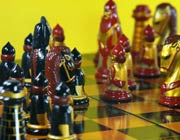 The right thing to do depends on the situation ©
In situation ethics, right and wrong depend upon the situation.
There are no universal moral rules or rights - each case is unique and deserves a unique solution.
Situation ethics rejects 'prefabricated decisions and prescriptive rules'. It teaches that ethical decisions should follow flexible guidelines rather than absolute rules, and be taken on a case by case basis.
...reflective morality demands observation of particular situations, rather than fixed adherence to a priori principles
John Dewey and James H. Tufts, Ethics, 1922
So a person who practices situation ethics approaches ethical problems with some general moral principles rather than a rigorous set of ethical laws and is prepared to give up even those principles if doing so will lead to a greater good.
Since 'circumstances alter cases', situationism holds that in practice what in some times and places we call right is in other times and places wrong...
For example, lying is ordinarily not in the best interest of interpersonal communication and social integrity, but is justifiable nevertheless in certain situations.
Joseph Fletcher, Naturalism, situation ethics and value theory, in Ethics at the Crossroads, 1995
Situation ethics was originally devised in a Christian context, but it can easily be applied in a non-religious way.
Elements of situation ethics
The elements of situation ethics were described by Joseph Fletcher, its leading modern proponent, like this:
- Moral judgments are decisions, not conclusions
- Decisions ought to be made situationally, not prescriptively
- We should seek the well-being of people, rather than love principles.
- Only one thing is intrinsically good, namely, love: nothing else
- Love, in this context, means desiring and acting to promote the wellbeing of people
- Nothing is inherently good or evil, except love (personal concern) and its opposite, indifference or actual malice
- Nothing is good or bad except as it helps or hurts persons
- The highest good is human welfare and happiness (but not, necessarily, pleasure)
- Whatever is most loving in a situation is right and good--not merely something to be excused as a lesser evil
- Moral theology seeks to work out love's strategy, and applied ethics devises love's tactics.
- Love "wills the neighbour's good" [desires the best for our neighbour] whether we like them or not
- The ultimate norm of Christian decisions is love: nothing else
- The radical obligation of the Christian ethic to love even the enemy implies unmistakably that every neighbour is not a friend and that some are just the opposite.
- Love and justice are the same, for justice is love distributed
- Love and justice both require acts of will
- Love and justice are not properties of actions, they are things that people either do or don't do
- Love and justice are essentially the same
- Justice is Christian love using its head--calculating its duties. The Christian love ethic, searching seriously for a social policy, forms a coalition with the utilitarian principle of the 'greatest good of the greatest number.'
- The rightness depends on many factors
- The rightness of an action does not reside in the act itself but in the loving configuration of the factors in the situation--in the 'elements of a human act' --i.e., its totality of end, means, motive, and foreseeable consequences.
[The text above is based on material in Moral Responsibility: Situation Ethics at Work, by Joseph Fletcher; Westminster Press, 1967]
Good and bad points
Good points of situation ethics
 Situation ethics is a personal approach ©
It's personal
Situation ethics is sensitive to circumstances, context, particularity, and cultural traditions. Every moral decision is required to demonstrate respect for individuals and communities and the things that they regard as valuable.
This avoids the logical, detached, impersonal ways of thinking that some people think are overemphasised in some other forms of ethics.
It's particular
Because moral decisions are treated on a case-by-case basis, the decision is always tailored to particular situations.
It's based on doing good
Situation ethics teaches that right acts are those motivated by the wish to promote the well-being of people.
Bad points of situation ethics
By the 1970s, situation ethics had been roundly rejected as no ethics at all...
Daniel Callahan, Universalism & Particularism, The Hastings Center Report, 2000
It excludes most universal moral truths
By doing this it seems to remove any possibility of guaranteeing universal human rights, and satisfying human needs for a useful ethical framework for human behaviour.
It's not clear what 'love' means
Although the notion of love used in situation ethics seems attractive, it's pretty vague and can be interpreted in many ways.
It's difficult to implement
Situation ethics seems to be little more than a form of act consequentialism, in that a person can only choose the right thing to do if they consider all the consequences of their possible action, and all the people who may be affected.
It can't produce consistent results
Situation ethics produces a lack of consistency from one situation to the next.
It may be both easier, and more just and loving, to treat similar situations similarly - thus situation ethics should not be treated as a free-for-all, but should look for precedents while continuing to reject rigid ethical rules.
It may approve of 'evil' acts
Situation ethics teaches that particular types of action don't have an inherent moral value - whether they are good or bad depends on the eventual result.
So it seems that situation ethics permits a person to carry out acts that are generally regarded as bad, such as killing and lying, if those acts lead to a sufficiently good result.
This is an uncomfortable conclusion, but one that affects other ethical theories as well. Moreover, it does seem to be accepted in certain situations. As an obvious example, killing people is generally regarded as bad, but is viewed as acceptable in some cases of self defence.
The popular TV drama 24 regularly brought up this issue with regards to torture. The characters in the drama claimed they were justified in the (sometimes brutal) torture of suspects because the information gained in doing so saved thousands of lives.
BBC iD
BBC iDBBC navigation
BBC links

BBC © 2014The BBC is not responsible for the content of external sites. Read more.
This page is best viewed in an up-to-date web browser with style sheets (CSS) enabled. While you will be able to view the content of this page in your current browser, you will not be able to get the full visual experience. Please consider upgrading your browser software or enabling style sheets (CSS) if you are able to do so.

