
Biotechnology includes any use of science or technology to alter the characteristics of a particular breed or animal.
Biotechnology
Biotechnology
Biotechnology
 James Watson and the late Francis Crick discovered the structure of DNA in 1953; Watson has spoken in favour of genetic engineering
 Biotechnology isn't something new - selective breeding to create more useful varieties of animals and plants is a form of biotechnology that human beings have used for thousands of years.
Biotechnology includes any use of science or technology to alter the characteristics of a particular breed or animal.
Biotechnology can be good or bad for animals - and it may also produce an answer to the ethical problems of experimenting on animals.
Transgenic animals raise a particularly difficult problem.
Human problems
Newspaper articles about the ethical problems of genetically engineered animals are usually concerned about the danger these animals may pose to human beings (usually to human health), rather than any implications for the animals themselves.
Animal rights
Genetic engineering and selective breeding appear to violate animal rights, because they involve manipulating animals for human ends as if the animals were nothing more than human property, rather than treating the animals as being of value in themselves.
Recent action to allow animals to be patented reinforces the idea of animals as human property, rather than beings in their own right.
Animal welfare
Biotechnology can be good for animals. Selective breeding and genetic engineering can benefit animals in many ways:
- Improving resistance to disease
- Breeding to remove characteristics that cause injury
- eg selecting cattle without horns
But biotechnology can also be bad for animals - the good effects for the breeder can offset by painful side-effects for the animals:
- Modern pigs have been bred to grow extra fast - some breeds now grow too fast for their hearts, causing discomfort when animals are too active
- Broiler chickens are bred to grow fast - some now grow too fast for their legs
Regulating genetic engineering
Profitability is one of the major drivers of both selective breeding and genetic engineering.
If animal welfare is not to be compromised, research must be restricted by a counter-balancing ethical principle that prevents altering animals in a way that was bad for the animal.
One writer, Bernard Rollin, suggests that a suitable rule to regulate genetic engineering would be this:
Genetically engineered animals should be no worse off than the parent stock would be if they were not so engineered.
This principle can easily be adapted to cover selective breeding.
Biotechnology and experimental animals
It's been suggested that genetic engineering may solve all the ethical problems of laboratory experiments on animals. The goal is to create a genetically engineered mammal that lacks sentience, but is otherwise identical to normal experimental animals.
Such an animal could not suffer whatever was done to it, so there should be no ethical difficulty in performing experiments on it.
Ethical problems:
- This argument seems convincing, but do you feel comfortable about it?
- Is there any ethical objection to creating genetically engineered human beings without sentience, and experimenting on them?
Transgenic animals
Transgenic animals
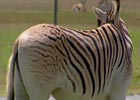 Less controversially, scientists are reconstructing the quagga - which became extinct in the 1870s
 Transgenic animals are animals that have been deliberately bred for research and that contain elements of two different species - they are creatures that blur the barrier between species.
These animals are often deliberately created with genetic defects, and these defects may well cause the animal to have a bad quality of life. A mouse has been created, for example, that has been genetically modified to develop cancer.
Ethical issues of transgenic animals
Transgenic animals raise several particular moral issues (quite apart from any damage they might do to the environment):
- Are animals that combine species an unethical alteration of the natural order of the universe?
- Is it unethical to modify an animal's genetic make-up for a specific purpose, without knowing in advance if there will be any side-effects that will cause suffering to the animal?
- Does 'creating' animals by genetic engineering amount to treat the animals entirely as commodities?
- Is it unethical to create 'diseased' animals that are very likely to suffer?
- Suffering may last for a long time in these animals as researchers want to conduct long-term investigations into the development of diseases
Religious views of transgenic animals
Against transgenic animals:
- God laid down the structure of creation and any tampering with it is sinful.
- Manipulating DNA is manipulating 'life itself' - and this is tampering with something that God did not intend humanity to meddle with.
In favour of transgenic animals:
- As human beings have been given 'dominion' over the animals, they are entitled to tamper with them.
- Palaeontology shows that the structure of creation has changed over time as some species became extinct and new ones came into being. They say that this shows that there is nothing fixed about the structure of creation.
Transgenic animals and religious food laws
Transgenic animals pose problems for religions that restrict the foods that their believers can eat, since they may produce animals that appear to be one species, but contain some elements of a forbidden species.
Around the BBC
BBC iD
BBC iDBBC navigation
BBC links

BBC © 2014The BBC is not responsible for the content of external sites. Read more.
This page is best viewed in an up-to-date web browser with style sheets (CSS) enabled. While you will be able to view the content of this page in your current browser, you will not be able to get the full visual experience. Please consider upgrading your browser software or enabling style sheets (CSS) if you are able to do so.

