by Paul Dunt
When the Ice Age ground to a halt and Essex began to emerge from the big freeze, the rising melt-waters left the county with some of its most intriguing landscapes. The huge quantity of water released from the ice may have separated Britain from the rest of Europe, but it also created the incredible coastal estuaries that make Essex what it is today. The Blackwater-Colne estuary is a great example. This enormous feature was formed not by rivers flowing into the sea, but by the sea-levels rising and flooding the land and that also led to the creation of some fantastic islands, such as Mersea near Colchester. Being cut off from the mainland has had a dramatic effect on the way Mersea has developed - and it has proved to be a haven for wildlife. The first clue lies all around the island - mud. It's easy to think there's little alive in the black and brown sticky stuff, but nothing could be further from the truth. Professor Graham Underwood from the University of Essex is an expert on the creatures that live in the inter-tidal zone. As the ice melted the mudflats that were created left a whole new opportunity for life to exploit and today just a few scoops with a spade can reveal a hidden world. 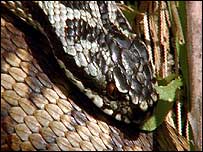 | An Adder |
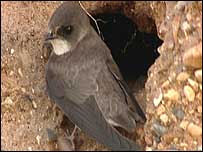
"There are all sorts of things living in the mud such as ragworms and molluscs, you just need to dig to find them" says Graham. "Closer to the shore there are also other amazing creatures such as specialist beetles that have learnt to take advantage of this new environment." The animals that moved into the mud also attracted other wildlife - and in particular, the birds. Today Mersea is a haven for numerous species including shelduck, avocets and curlew, all brought to Essex by the rich food supply that is revealed every time the tide goes out. But the birds haven't just taken advantage of Mersea's mud. At Cudmore Grove Country Park to the east of the island a colony of sand-martins have made their home in the sea-cliffs. Thousands of years ago these cliffs once formed part of the Thames before the Ice Age diverted the river further south. But now the soft sands and gravel's provide a perfect place for the martins to dig their holes where they will raise their young before departing for Africa for the winter. "They first came here a few years ago and now they are one of the largest colonies in the county," says Park Ranger Dougal Urquhart who lives and works on the reserve. What's even more extraordinary is that the sea-cliffs are packed with 300,000 year old fossils, including those of elephants and hippos, showing the incredible animals that once roamed the county. The remoteness of Mersea has also given other animals a perfect undisturbed home. Adders are often spotted in the country park where they enjoy basking in the sunshine, although other species which are found on the mainland, such as nuthatches and deer don't live there. That's not to say they haven't tried - Muntjac deer have been found washed up on the shores. Cudmore Grove Country Park is a great place to visit if you want to get a taste of island life and the legacy left to the county at the end of the Ice Age. Events are held throughout the year, including guided walks. There's a bird hide and behind the beach is an area of clifftop and grassland providing space for picnics.
Contact details
Cudmore Grove country park, Bromans Lane, East Mersea, Essex, CO5 8UE, Tel: 01206 383868.
|