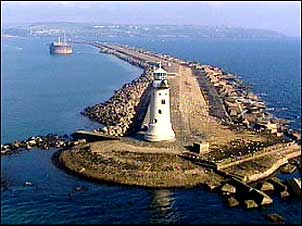
Plymouth Breakwater can truly claim to have shaped the history and fortunes of the South West of England.
The Breakwater is a striking man-made feature lying at the mouth of Plymouth Sound between Bovisand and Cawsand Bays. The story of the mile long breakwater is one of engineering ambition played out in the toughest of environments. In 1811 Civil Engineer John Rennie was instructed by the Admiralty to draw up plans for a breakwater that would transform the Sound into 1,000 acres of safe anchorage. This huge structure was referred to as 'the great national undertaking' when work started in 1812. It was the Channel Tunnel of its era, taking almost 30 years plus to complete. This major civil engineering project is in a many respects quite pioneering - it's still one of the world's largest free-standing breakwaters. The breakwater is largely built of Plymouth limestone quarried locally - 3.5 million tonnes of it. About 25 acres of a Plymouth quarry at Oreston disappeared to build this structure. The purpose of the breakwater is to provide safe harbour but it has also been a hazard to shipping on occasion.
From its completion in 1841 it had to be marked in some way with lighthouses or beacons. One of the real wonders is that this is a living project continually updated to safeguard Plymouth against the worst weather conditions the Channel can throw at it.
|