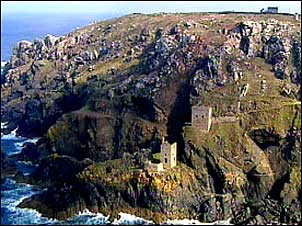
Botallack Mine was created by the Industrial Revolution that shaped Cornwall.
There is evidence of tin mining in this area from the 17th Century and possibly earlier. Botallack stands defiant above the Atlantic on Cape Cornwall, and its old workings are the most recognised symbol of Cornwall's proud mining heritage. But this was a harsh industry which sometimes claimed lives. Mines were small, cramped and vertical - death and injury were a fact of everyday life. Rockfalls, accidents and explosions were not uncommon. In 1863 the chain which pulled the mine gig suddenly broke, causing eight men and a boy to plummet their deaths down the shaft.
Many miners developed health conditions such as Bronchitis, TB and rheumatism from their time underground.
It was the high value of the tin that drove some men to take desperate risks and at Botallack they tunnelled under the ocean itself. The tunnels which run underneath the old engine houses travel out into the Atlantic for more than a mile, forming a vast industrial complex under the waves. Botallack continued successfully as a mine until the 1870s until closure in 1895. Despite sporadic reopenings, Botallack finally closed in February 1914 during the mining depression and, despite efforts to investigate new workings, it never reopened. Today Bottallack shows that sometimes man made wonders are more than objects of beauty or power - they are monuments to the people who suffered because of them. Visitors can still see the remains of the engine houses precariously clinging to a promontory above the sea. At the top of the cliffs there are also the remains of one of the mine's arsenic-refining works.
Also look out for the mine's count-house or account house which acted as the mines office.
|