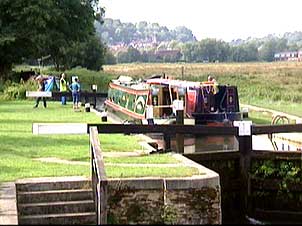
The Wey Navigation is significant as a landmark in mass transportation. Sir Richard Weston saw the potential in taking larger vehicles down the River Wey to London to transport goods in the 17th Century. But first, the meandering river would need to be straightened using a new system of locks. This ground breaking technology required thousands of gallons of water to be controlled behind embankments reinforced with wooden hurdles. The Wey Navigation opened in 1653, one of the first British rivers to be made navigable. It proved to be an immediate success - by its second year of operation, it had raised £15,000 from tolls, the equivalent of £1.5 million in today's money. The lock not only allowed for navigation it enabled bulky goods to be carried with ease including wool, linen, and coal. Tonnage of up to 16 tons could be pulled by one horse. Today its commercial use has declined dramatically. but it fulfils a new role as a recreational resource for narrow boats and tourists keen to enjoy its leisurely lifestyle. |