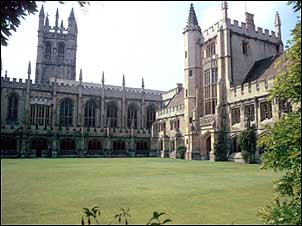
Oxford is a microcosm of British architecture, embracing a range of styles. The city is best known for its colleges and towering spires. One of the best views of the city is from the top of St Michael's Tower at the city's North Gate. The tower is Oxford's oldest building, constructed in the 11th Century when the city had only 3,000 citizens. Back in the 12th Century the University was fairly small with just a collection of students and masters. Oxford lays claim to being the oldest university in the English-speaking world with nine centuries of continuous academic existence. The exact date of the university's foundation is unclear, but teaching started around 1096. In the 13th Century, the university was at the centre of rioting between townspeople and students. This conflict between town and gown accelerated the creation of the first halls of residence. These were followed by the first of Oxford's colleges - University, Balliol and Merton Colleges which were created between 1249 and 1264.
By the 14th Century more academic halls started to develop, each based around a master and students. In the late 14th Century, after the Black Death, there was a major growth in university buildings. Around 1378 New College was built on a site outside the city walls, littered with the remains of corpses, left from the plague. Other college buildings also sprung up, using a variety of stone from the Cotswolds, bath and France. During the 17th Century the city became a Royalist stronghold during the Civil War. The University supported the king and Charles I held a counter-Parliament in Convocation House. Oxford was King Charles 1's headquarters until he surrendered his garrison in 1646. Today Oxford is a major university city with over 17,000 students. |