 |
Hasn't technology changed... | |
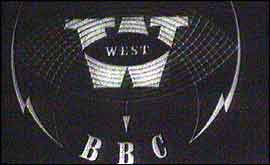 | | The first television graphics were hand-drawn on card |
| | From film cameras to satellite newsgathering - the technology used by Points West has changed significantly over the years. |
BBC Bristol
Radio Bristol
BBC Wiltshire
Radio Swindon
Radio Wiltshire
BBC Gloucestershire
Radio Gloucestershire
BBC Somerset
Somerset Sound

Have you ever wondered
what goes on behind the cameras? Find out in our tour of the newsroom and studios.
Eenjoy one of our live views across the West in our webcams section
| | For many years the news and features on Points West were shot on film - first black and white and then colour in the 70s.
Each roll had to be driven back to the studios in Bristol where it was processed in our own laboratory before being edited.
Often the sound and pictures were on separate rolls. Once edited, the film would be turned into television pictures using a large machine called a telecine.
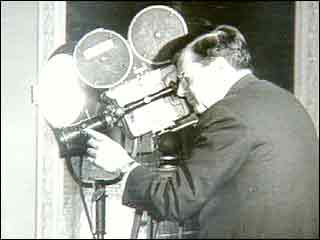 | | The old film cameras needed lots of light to work. Here, Bill Morris is using a 'sound on film' camera circa 1965. |
When electronic newsgathering (ENG) was introduced, in the mid-70s, the electronic camera could be connected up to a "portable" recorder which could record pictures and two channels of sound.
The poor old sound recordist had to lug the recorder around. The tapes only lasted 30 minutes - the batteries not much more.
The first generation of ENG equipment was heavy, bulky and needed lots of lighting. It was not uncommon to have four people on a news crew - not including the reporter.
Because there was no need for processing, the material could be edited much later and still make it in time for transmission.
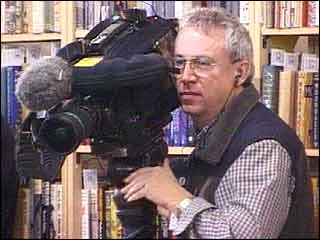 | | Modern TV cameras are not much bigger than a domestic camcorder |
In contrast, the camera you can see Richard Clutterbuck using is modern and lightweight.
The picture quality is much clearer and you don't need lots of extra light.
Richard's camera can also broadcast live when he works with the satellite truck on outside broadcasts.
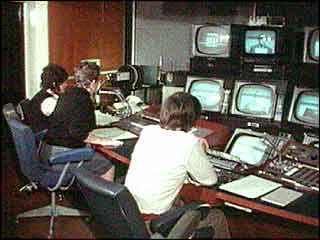 | | The Points West control room in the 1960s |
The studio control room has expanded and been modernised as the pressures of live broadcasting have increased.
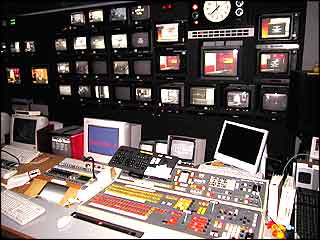 | | The Points West control room as it is today |
Points West has its own dedicated four-camera studio.
The control room is able to deal with multiple outside broadcasts and has been used for general election coverage and Children in Need programmes.
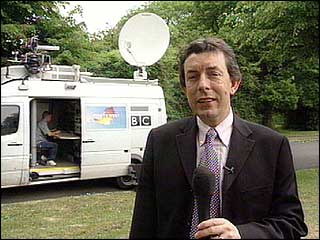 | | Clinton with the Points West satellite truck - Chris Shearing is the satellite truck engineer in the van. |
Points West keeps up with the latest technology - we have our own satellite truck which means we can send pictures and sound back from virtually anywhere in our region - and even parts of Europe.
The van is a also self-contained studio with its own editing and communications facilities. | | | |
|
| |
|






