 | 13 November 2014 |

| |
| BBC Homepage | | |
| |||
| Contact Us | | |
D-Day 65th anniversaryYou are in: Dorset > History > D-Day 65th anniversary > Plotting D-Day's success 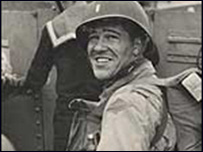 A US GI in Weymouth ahead of D-Day Plotting D-Day's successIn 1944 thousands of troops were in Dorset preparing for D-Day, but after months of planning, including at least one discussion in a Bournemouth hotel room, the final decision to proceed came down to something typically British - the weather. Dorset played a key role in the preparations and launch of the Allied Forces' invasion of northern France, which marked the beginning of the end of World War II. Thousands of troops were stationed all over the county in readiness for the sea and airborne attack on Normandy to liberate Nazi-occupied Europe Leading the planning of D-Day was Supreme Commander of the Allied Forces, Dwight D. Eisenhower – later to become the 34th President of the US, and Britain's Field Marshal Bernard Montgomery, Ground Forces Commander in Chief. Strategic planningWith other advisers, the two had finalised their plans in the weeks before the D-Day landings, and at least one of these meetings took place in a hotel in East Cliff in Bournemouth, while they were visiting the troops who were based in the area. The Carlton Hotel witnessed strategic battle plans between the military men, for an operation that would involve air and sea assaults on five code-named beach locations in occupied northern France. However, good weather would be crucial for the successful launch of the attack, but conditions in the early part of the month they had chosen meant their original date would not be suitable. Advised that the weather would make a brief improvement, and with the forces in place, Eisenhower made an almost 11th hour decision to go ahead on June 6 1944 instead. The alternative would be to delay the entire operation for another month. 'Shall we, shan't we, go?'Ginge Thomas, who was employed as a shorthand writer to Lieutenant General Frederick Morgan, Chief of Staff to the Supreme Allied Commander (COSSAC) in London, recalls this time, as told to the BBC's History website: 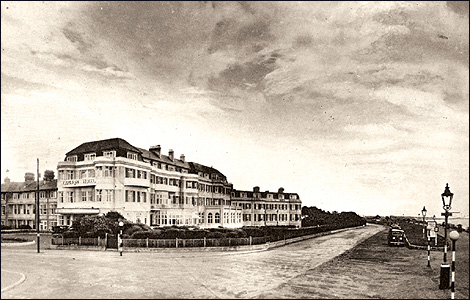 Carlton Hotel, 1946 (pic: Rodney Legg) This day had been built up so carefully - carefully planned, and then it looked as if perhaps it couldn't happen, with the weather forecast. Heading to OmahaTroops departed from all along the south coast from Devon to Hampshire, and in Dorset 20,000 troops left from Weymouth & Portland in the first fleet (there were many more non-combat support staff remaining), with thousands more leaving from Poole. Heading to beach code named Omaha, the US 1st Division – known as The Big Red One – was one of the first assault groups to leave from Weymouth and Portland. Inland, the 6th Airborne Division of the British Army left from RAF Tarrant Rushton near Blandford Forum, leading the air assaults. Eighty thousand of American military personnel had been stationed all over Dorset in readiness for the attack, but the necessarily confidential nature of the details of the assault meant the troops' sudden departure from Weymouth and Portland was still a surprise for local civilians. 'Like a giant G.I camp'Weymouth man Roy Wellman was there, as his son James tells the BBC's WWII People's War website: "The whole of Weymouth and Portland at this time was like one giant G.I. camp. They were everywhere, you couldn't move for them. "One day however in early June my Dad woke up to find the whole area deserted by the Americans - where had they gone? "No one knew. It was not until later that day they found out. The invasion of fortress Europe had started. It was D-Day." last updated: 25/05/2009 at 13:07 SEE ALSOYou are in: Dorset > History > D-Day 65th anniversary > Plotting D-Day's success  
| ||||||||||||||||||||
| | About the BBC | Help | Terms of Use | Privacy & Cookies Policy |

