 | 13 November 2014 |

| |
| BBC Homepage | | |
| |||
| Contact Us | | |
Local HistoryYou are in: Dorset > History > Local History > Nothe Fort 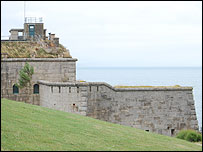 Part of Nothe Fort, Weymouth Nothe FortIt's one of the most well preserved forts of its kind in the country, and now Nothe Fort enjoys a life as a museum and tourist attraction. Nothe Fort in Weymouth is a monument to a time when military sea defence was an important part of life not only for Weymouth and Portland, but was considered a priority for the whole country. Help playing audio/video Fearing an attack from the French, Prime Minister Palmerston endorsed an 1860 report that recommended building a series of sea defences in strategic positions around the UK coast. But by the time Nothe Fort was completed in 1872, the threat from the French had long passed and the fort's firepower had been superceded – resulting in Nothe Fort, and the other forts that had been built as part of the plans, becoming known as Palmerston's Follies – said to be the most expensive programme of fixed defence ever built in peacetime. 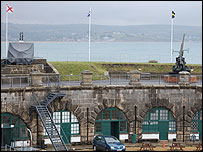 The fort enjoys great views of the area Defending PortlandNothe Fort's main objective was to help defend Portland Harbour which remained an important south coast military base – along with Portsmouth and Plymouth – so Nothe Fort, as defence for Portland, was far from redundant. During World War II, the fort had an anti-aircraft gun stationed inside it, but its main role was storing anti-aircraft ammunition for the south west. The fort remained in service until 1956, and Weymouth and Portland Borough Council took over responsibility in 1961. DerelictAbandoned, the building fell into disrepair at the hands of trespassers and squatters, but its prime location and spectacular views of Weymouth seafront and Portland ensured it was never totally forgotten. 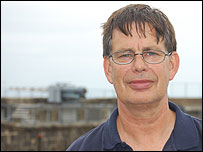 Nothe Fort's Director, David Joy There was even a short-lived plan to convert the building to a hotel. Work began in 1971 but was soon abandoned shortly after. But since the building's takeover by the Weymouth Civic Society, the fort, since 1980, has slowly been restored to its former glory, plus a military museum, and is one of Weymouth's most popular tourist attractions with up to 45,000 visitors a year. David Joy, Director of Nothe Fort, says: "It's a very important building and it's a part of our heritage. It was built to defend this part of the coast and it's a monument to the endeavours of the Victorian engineers. Ingenuity"It shows their brilliance in construction - thousands of tonnes of rock were brought in and a lot of it was put in place by hand - it's a testament to their ingenuity." 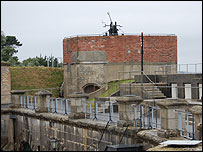 Guns once sat on these raised platforms. Built mainly from the world famous Portland stone, the fort is arranged over three levels with 70 rooms off its basement level tunnel. In the 1980s, some were converted into a District Command Centre to be used in the event of a threat of a nuclear attack, complete with 30 bunk beds. And as well as a reminder of Dorset's contribution to military history, the fort is also developing a new community-based role, staging plays by local theatre groups in the central courtyard. VolunteersThe fort is run by a team of five paid staff members and a dedicated team of 70 volunteers. 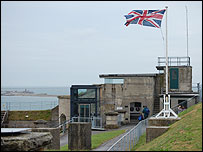 The fort has a team of 70 volunteers One of them is Brian Sneddon, who has been volunteering at the fort for 14 years, and has seen it benefit from a £1.8m lottery grant and a further £600,000 investment thanks to the involvement of local authorities and English Heritage. Says Brian: "Lots of work has been done on the fort and there's great comradeship between all of the volunteers." Anyone interested in volunteering at the fort can contact Director David Joy. David says: "We're always on the look out for volunteers. We couldn't run the fort without them. There's always a role for someone to play here, whatever your skills may be." last updated: 19/05/2009 at 14:13 You are in: Dorset > History > Local History > Nothe Fort 
| ||||||||||||||||||||
| | About the BBC | Help | Terms of Use | Privacy & Cookies Policy |

