 | 24 September 2014 |

| |
| BBC Homepage | | |
| |||
| Contact Us | | |
Nature FeaturesYou are in: Dorset > Nature > Nature Features > A new generation at Abbotsbury Swannery 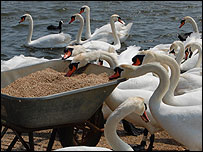 Feeding time at Abbotsbury Swannery A new generation at Abbotsbury SwanneryDavid Allen After overcoming an outbreak of bird flu at the start of 2008 the world famous swannery is seeing some of its highest breeding numbers for years. The village of Abbotsbury has been home to the world famous Swannery since it was established by Benedictine Monks in the 1390s who farmed the birds for food.
Help playing audio/video The area with its combination of salt and brackish water [a combination of salt and fresh water] is the perfect natural environment for the swans to breed and rear their young. 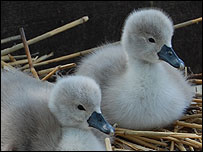 New born cygnets From mid May to late June hundreds of cygnets hatch from eggs in nests literally feet from public pathways. Cobs and pensThe mute swan is one of the heaviest flying birds, with males (known as "cobs") averaging about 12 kg (27 lbs) and females (known as "pens") more than 9 kg (20 lbs). Mute swans mate for life, and are very territorial. They can raise up to 10 cygnets with both mother and father taking turns to care for the nest.  John Houston General Manager, Abbotsbury John Houston, the general manager for Abbotsbury Tourism, has managed the area for the past 11 years. He recalls the recent outbreak of Bird Flu which could have caused devastation at the swannery. "The whole staff were worried we might lose the whole colony but as it panned out the swans built up immunity to the disease. We were thankful to be able to open on time for the visitor season". Breeding numbers upBreeding numbers are up considerably and 2008 has seen one of the earliest hatchings in the history of the swannery with the first taking place on the 27 April. Normally the first cygnets are born between 12 - 14 May one reason maybe the very mild winter. There are 155 nests on site with an average of 6 eggs in each one with some having 10-12 eggs in the nests. 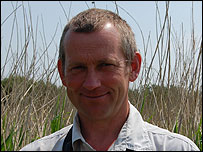 Steve Groves, Assistant Swanherd One of the men who manage the colony is Deputy Swanherd Steve Groves who has the job of feeding up to 600 swans, checking the nests, recording egg dates moving some cygnets to rearing pens, taking school parties around the site and doing general maintenance. Today thousands of visitors flock to the sight and are able to walk through the colony of nesting birds. The birds are free to go at any time but they return to the site every spring to continue the process of rearing their young which has been established for many hundreds of years. Abbotsbury Swannery is open seven days a week between March 15 to November 2. last updated: 20/05/2008 at 08:15 SEE ALSOYou are in: Dorset > Nature > Nature Features > A new generation at Abbotsbury Swannery   
| ||||||||||||||||||||
| | About the BBC | Help | Terms of Use | Privacy & Cookies Policy |

