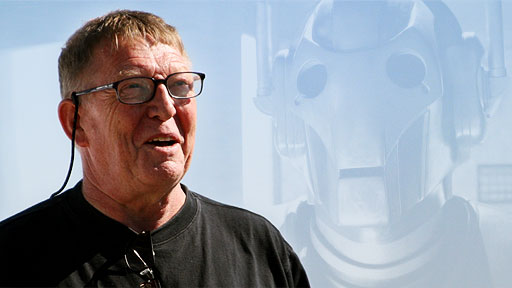
Ian: How did you feel when you heard that Doctor Who was being brought back by Russell and co. Did you expect (or hope) to be asked to direct for the new series?
Graeme Harper: I was really excited as I knew it could really be brought to life with all the technology available now. I did not expect to be thought of, as I am considered part of the old school. I suppose I have never really grown up though; I think that's apparent in my work. I did make contact to say I would love to be considered, but although I know I was approached for Series One, I was already signed up to do another series for ITV.
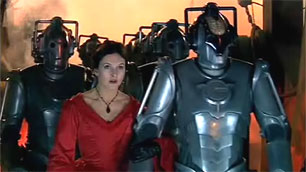
I was approached again for the second series, and after meeting Russell T Davies and Producer Phil Collision they offered me not one but two Cybermen stories! One of them had the Cybermen opposed by Daleks - what a coup for me! I was really surprised and excited.
Lewis: Comparing your excellent work on the classic series and your equally excellence in the new series, would you say you're the same director? Do you keep similar styles or is it completely different these days?
Graeme: Thank you for your very nice words. I think in 24 years I have changed and hopefully developed my style, if I have one! There are certain shots and ideas that, though effective when I used them, I have never used again since. Yet there are other techniques I use all the time. Also, I think all directors adapt their style of shooting depending on the subject they are dealing with and how that story needs to unfold.
Tracey: Out of all the Doctor Who episodes you've directed, what was the hardest part to bring to life on screen?
Graeme: There are quite a few, but the one that stands out is the magma creature in The Caves of Androzani, the last Peter Davison story. The creature just did not work and I did not have the experience to know how to cleverly disguise its downfalls during shooting. I think it remains a blemish on what could have been a really good story.
Thomas: As the series has progressed from Series One up to now, I notice it has become more cinematic, particularly in terms of camera movement. How much of a say do the directors have in terms of what they are allowed to do when staging sequences?
Graeme: The director has complete control over how he or she stages and shoots the stories. If anything you do is not wanted, however you soon get to know, as the production is very open between producers and directors. Things that don't work so well are put aside for another use some other time. We try to be as innovative as possible throughout, because of widescreen TV sets and format the whole style of shooting for TV has changed. If you want and can afford the equipment, then it is a fantastic format to give it a more cinematic feel.