BBC HomeExplore the BBC
This page has been archived and is no longer updated. Find out more about page archiving.

24 September 2014
DevonDevon

BBC Homepage
»BBC Local
Devon
Things to do
People & Places
Nature
History
Religion & Ethics
Arts and Culture
BBC Introducing
TV & Radio

Sites near Devon

Cornwall
Dorset
Somerset

Related BBC Sites

England

Contact Us


April 2005
Helping magical merlins
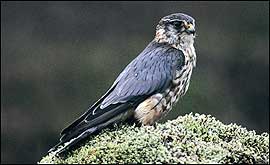
Merlin
An endangered Merlin
Photo: RSPB Images/Chris Gomersall
Britain's smallest bird of prey is under threat in the South West, prompting help from the long arm of the law.
SEE ALSO

Climate Changes affecting Devon's birds

Saving the Damselfly

Endangered birds in Devon

Outdoors index

Nature index

WEB LINKS

RSPB

Exmoor National Park Authority

National Trust

Devon and Cornwall Police
The BBC is not responsible for the content of external websites.

FACTS

Male merlins have blue-grey backs and rusty breasts with dark streaks on them.

The outside edge of the wings, towards the tip is dark and this is visible both in flight and when birds are perched.

Female merlins are larger and browner with a paler breast, streaked heavily with brown. They also have a barred (stripy) tail.

There are currently 1,330 breeding pairs of merlins in the UK

They are ‘amber listed’ meaning they have suffered a historical population decline during 1800-1995

Although the population is recovering, numbers have not increased sufficiently for the bird to no longer be of conservation concern.

Merlins have special protection under the Wildlife and Countryside Act 1981, as amended by the Countryside and Rights of Way Act 2000.

The Exmoor merlin survey is a partnership between the RSPB, Exmoor National Park Authority and the National Trust.

The initiative to protect the birds on the moor is a partnership between the RSPB, Exmoor National Park Authority, Avon and Somerset Police and Devon and Cornwall Police.

PRINT THIS PAGE
View print friendly version of this page..
get in contact

A bird of prey threatened by human disturbance on Exmoor is to receive extra protection in an attempt to safeguard its nest sites.

Exmoor is thought to be the only place in the South West where merlins, just 25-30cm long, breed.

During the 1950s and 1960s, in common with other birds of prey, merlins suffered from the effects of pesticides as their traditional food supplies of small rodents became tainted.

Human persecution, habitat loss and increased disturbance may also be responsible, but overall the reasons for their decline are not fully understood.

Unfortunately the impact of vandalism or violence can't be discounted and the RSPB believes at least one pair failed to successfully produce any young last year due to human interference.

All wild birds are protected under the law and merlins are specially protected from disturbance when they are breeding.
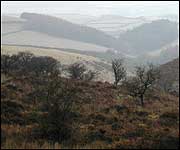
Exmoor
The craggy heathland of Exmoor that is the merlins' breeding habitat

Anyone found guilty of ‘intentionally or recklessly’ interfering with a merlin nest faces a fine of up to £5,000 and/or six months in prison.

"We’re doing all we can to protect merlins on Exmoor," said Wildlife Crime Officer, PC Roger Jolliffe.

"It’s thought to be the most important site for the birds in the whole of southern England and we believe the birds are under threat.’

The RSPB, Exmoor National Park Authority and the National Trust will also keep a close eye on the Exmoor merlin population throughout the spring and summer, as well as being involved in the first thorough survey of the birds for five years.

"The aim of the survey is to determine the number of breeding pairs across the moor," said Helen Booker of the RSPB

"In the early 90s monitoring of Exmoor showed there were five breeding pairs, but by the time the last survey was carried out in 2000 it had fallen to just two pairs."

The survey is being largely paid for by the Exmoor National Park Authority, with the aim of finding the most important areas for the birds so they can be given the best possible protection in the future.

"As well as our own protection activities," said Helen. "We urge members of the public to be on the look out for any suspicious activity and to report it to the RSPB and the police."


line
Top | Great Outdoors Index | Home
Also in this section
Weather
Weather features
Monthly statistics, features and information.

Links and Info
Links & information
Useful links for locals and visitors.


E-cards
E-cards
Send an e-postcard of glorious Devon to a friend.


In Pictures
In pictures
Browse through our vast selection of photo galleries.

Contact us
BBC Devon
Broadcasting House
Seymour Road
Plymouth
PL3 5BD
(+44) 01752 229201
[email protected]


About the BBC | Help | Terms of Use | Privacy & Cookies Policy