| Butterfly returns to Devon nature reserve | |
| 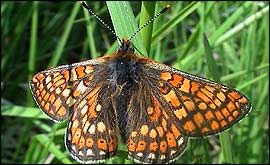 | Welcome back! The marsh fritillary butterfly has returned to Vealand Farm nature reserve
Photo:Gary Pilkington, DWT |
| | Conservationists are delighted at the return of a rare type of butterfly to a Devon nature reserve. The butterfly has also been seen in record numbers elsewhere in the county this summer. |
| | | The beautiful marsh fritillary butterfly has flown back into a Devon nature reserve - after an absence of at least 15 years.
On one day this summer, 20 were counted at the Devon Wildlife Trust's Vealand Farm nature reserve near Holsworthy.
And there's more good news for the internationally vulnerable species because it has also been seen in record numbers at several other trust reserves in Devon.
Conservationists are particularly excited because it shows that with correct management of habitat, rare creatures can return and thrive again.
The marsh fritillary was once common across Britain and Europe, but has been in sharp decline over the past century because of loss of habitat.
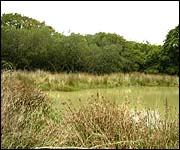 | | Vealand Farm nature reserve |
It's a priority species in the UK's biodiversity action plan and its European threat status is listed as vulnerable.
So the numbers spotted in Devon this summer have come as a pleasant surprise to conservationists.
The Devon Wildlife Trust reports record numbers at reserves including Volehouse Moor, Mambury Moor and Stowford Moor.
There have also been large numbers at Dunsdon national nature reserve.
This revival is no accident and hasn't happened overnight.
The trust has been managing the habitat at the reserves for several years in the hope of attracting back species such as the marsh fritillary butterfly.
Gary Pilkington of the trust said: "We took over at the Vealand reserve four or five years ago. Before that, it hadn't been managed too well.
"With grassland, you need to graze it lightly and burn it sometimes during the winter.
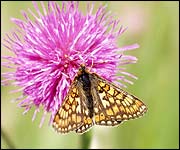 | The marsh fritillary needs the right sort of habitat to thrive
Photo: James Chubb |
"The field where the butterflies have returned hadn't been grazed or burned for years. But that's what we've done."
This area is culm grassland - a habitat which is even more rare than the tropical
rainforests.
The correct management of the past few years has led to a return of the plants which the caterpillars feed on.
But even Gary is amazed at the rapid rate of success: "I didn't expect the marsh fritillary to come back, to be honest.
"I've been told that they haven't been seen here for 28 years. The most conservative estimate is 10-15 years.
"We were treating Vealand as a satellite site. We thought if we got the habitat right, some of the butteflies from Dunsdon half a mile away would relocate. And it has worked."
It's the same story at reserves such as Volehouse in north west Devon, where habitat management has led to the return of hundreds of marsh fritillary butterflies.
Gary said: "It's fantastic news, and it's all down to the habitat - the culm grassland, which is also good for other insects and plants such as orchids."
Article written: 29th July 2004
| | | |
|
| | Weather |  | | Monthly statistics, features and information. |
| E-cards |  | | Send an e-postcard of glorious Devon to a friend. |
| In Pictures |  | | Browse through our vast selection of photo galleries. |

BBC Devon
Broadcasting House
Seymour Road
Plymouth
PL3 5BD
(+44) 01752 229201
[email protected]
|
|