|  | When I was little, a trip to Buckfast Abbey was an annual event. It was part of the family calendar.
We also went there on school trips, and we loved it because anything was better than being stuck in the classroom!
Visiting Buckfast Abbey was just one of those things you did, when you were growing up in Devon in the early 1970s.
But I never went back after that because I thought it was a touristy thing to do and only holidaymakers went there.
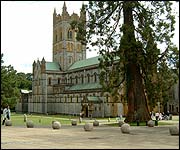 | | Buckfast Abbey |
Then, one week this summer, I decided to be a 'grockle' and revisited some of the places in Devon I'd not been to for 30 years.
One of those was Buckfast Abbey.
The improvement in facilities in recent years has transformed the Abbey into one of Devon's top visitor attractions.
The enhancements include the gardens, which are separated into distinct, small areas.
There's the lavender garden, sensory garden and physic garden - as well as the open spaces and wonderful trees which are everywhere around the Abbey site.
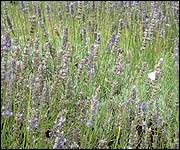 | | The lavender garden attracts bees and butterflies |
This visit was in August, so the lavender garden was literally buzzing with bees and butterflies. There are dozens of different types of lavender - and you can smell them almost before you can see them.
Some of the lavender types are difficult to grow, and the idea behind bringing so many together is to illustrate the sheer diversity of lavender, which comes in various shapes and sizes.
If you wander down the path a bit more, with the Abbey to your right, you'll reach the sensory garden on the left.
This garden is based on designs from medieval pleasure gardens. It's an area for contemplation and peace, with water running down the centre to the chamomile seat.
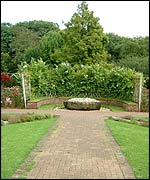 | | The chamomile seat |
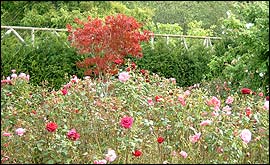
The chamomile seat is surrounded by a trellis which is covered in honeysuckle and roses. The garden also features roses of pink and red shades, and a Japanese maple tree.
Between the sensory garden and the Abbey building is the physic garden.
Here, there are over 200 plants which would have been grown in a monastic herb garden. It's divided into four sections, containing household, culinary, medicinal, and poisonous plants.
Among the medicinal plants are feverfew (for headaches), agrimony (for coughs and colds and gastric complaints, and self-heal (for hypertension and conjunctivitis).
Chamomile and lavender, meanwhile, are used for their antiseptic properties.
And, in among the herbs, there is also mint, thyme, garlic, chives, and rosemary.
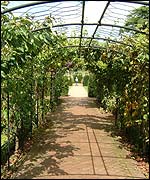 | | The Physic Garden |
All of the plants would have been available and used before 1539 - the year the Abbey was closed down as part of Henry VIII's dissolution of the monasteries.
The most eye-catching part of this garden is the arbour, which is covered with fruit at the right time of the year, which this visit was.
In August, the garden was awash with apples, pears and soft fruit.
Then, over in one of the corners, is the poisons section. But don't worry - these plants are kept out of harm's way on an island in a pond.
There are also private gardens which are used only by the community of Benedictine monks.
Car parking at Buckfast Abbey is free, as is admission to the gardens and the Abbey itself.
Disabled access is excellent - including toilets - and there is a restaurant, and produce shop with goods made at the Abbey.
Buckfast Abbey is open every day of the year. For more details, visit the Abbey's website, which is linked from the left of this page.
Article written: 14th September 2004.
|