| 28 October 2014 |

| |
| BBC Homepage | | |
| |||
| Contact Us | | |
SpringwatchYou are in: Devon > Springwatch > Behind the scenes at Springwatch 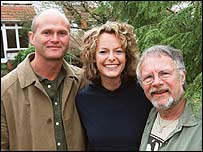 Simon King, Bill Oddie and Kate Humble Behind the scenes at SpringwatchBy Chris Ellis With more than 40 nest-box cams, a team of around 100 people and 10 miles of cable around a quiet Devon farm, Springwatch is one of the most ambitious BBC Natural History programmes ever. Springwatch is back!Springwatch is back on BBC Two from Monday 29th May. Bill Oddie and Kate Humble are back at the organic farm in Devon and this year the programme is bigger and more exciting than ever! Plus - don't miss the Springwatch Festival of Nature at Bicton College in east Devon on Sunday 4th June. See link on this page for ticket information. With up to four million viewers each night, the wildlife programme Springwatch has been one of the BBC's surprise successes. The 2005 series was transmitted live from the Fishleigh Estate, an organic farm in Devon. Now the cameras are set to return for 2006 with the series running from 29th May to 15th June. Terry Wogan and Derren Brown are among the celebrities hooked on the reality series, presented by Bill Oddie, Kate Humble, Simon King and Mike Dilger. For the producers, the show is about getting people out and enjoying the countryside. 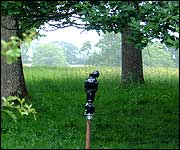 Remote controlled mini camera "It's genuinely reality TV," said series producer Stephen Moss. "People are sick and tired of so called reality programmes and this is better than Big Brother because it's real. "We set up the cameras, we set up the cables, but we don't know if the wildlife is going to come, and we don't know when the chicks are going to hatch. "The most important thing for me is the audience has a connection with the wildlife and showing them unprecedented privileged views." The programme is a perfect showcase for the organic methods used on the Fishleigh Estate, which lies within the gently rolling countryside of North West Devon. As the programme's roving reporter, Mike Dilger spends months searching out the best places around Britain to film wildlife. "My mission is to chase up the iconic wildlife of Spring," said Mike. 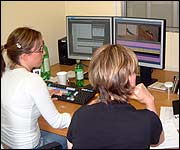 Editing material from the many cameras "It's such a crucial season and it's a time of fantastic behaviour, but you have to be really quite patient and spend a lot of time going to the right locations. "When you're going for one particular mission like filming hares boxing, then you'll stay with that animal for maybe two or three days solid. "You'll spend something like 10 hours a day following them, sitting in a hide watching them really closely and it's only then that you start to see some amazing behaviour." Technical challengeWith an hour long programme four days each week over a three-week period, Springwatch is a technical challenge for all those involved in its production. The use of sophisticated mini-cameras and technical equipment allows viewers to get privileged scenes from a variety of creatures. It's only possible thanks to a massive change in filming technology over the past decade. "About 10 years ago you needed a nest box fixed to a shed, and a cameraman and full-size camera to view a species," said Stephen Moss.  The Springwatch control room "Today we use mini cameras no bigger than a cigarette lighter and transmit quality pictures via cable and microwave links." The series has also launched the 'Breathing Spaces' campaign to encourage people to get out and create space for nature in their community. last updated: 11/01/2008 at 15:14 You are in: Devon > Springwatch > Behind the scenes at Springwatch |
| | About the BBC | Help | Terms of Use | Privacy & Cookies Policy |