An exciting new project investigating what it means to be Cumbrian.
Listen to the programme online >> There’s gold in them there hills!
That old wild west promise of theres gold in them there hills might not have been strictly accurate for Cumbria but the mineral wealth buried under the surface of the earth has certainly earned more than a bob or two for the county. 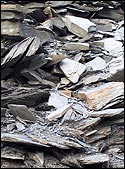 | | Slate at Coniston |
In fact some would argue that modern day Cumbria has been shaped entirely by what lies, not on top of, but beneath the ground. Villages like Threlkeld and Coniston only exist because some early pioneer discovered something worth mining; lead, zinc, copper
and the rest is history. Iron ore was processed to make steel rails which needed transporting all around the world. So we have mining, steel-making and ship-building, three huge Cumbrian industries which led to the growth of towns like Workington, Whitehaven and Barrow.  | | Copper mines in a valley |
Mining was a terrifically important source of wealth for Cumbria.
Around the turn of the century about a quarter of the working population was employed in mines and quarries. Thats one out of every four blokes you see walking down the street.
Quite a thought. And the history of mining in Cumbria, like everywhere else, has two sides. OK, it provided jobs, it built the foundations of whole towns and communities
. but it was dangerous, dirty work. It might have put the bread on many a familys table it also meant working in dark, dismal conditions, tough work for tough men and women.
The youngest child recorded mining underground in Cumbria was four. Unthinkable now. And Cumbria didnt escape its fair share of catastrophic mining disasters. Ian Tyler is passionate about the countys mining history and really makes it come to life if you go to see him at the Threlkeld Quarry and Mining Museum. 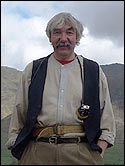 | | Ian Tyler in front of Blencathra |
Ian Tyler describes some of Cumbrias valuable rocks and minerals and what they were used for. You can see fragments of Cumbrian hills all around the world. Theres a street in South America paved entirely with Threlkeld cobbles!
Therere corporate headquarters in Canada and Japan with floors made from Westmorland green slate, and theres a town in the U.S. built from St Bees sandstone. 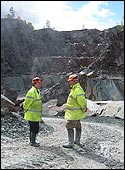 | | Donald Kelly and Mike Dickinson at the Burlington Elterwater Quarry |
And its not just part of our history. Fine grade iron ore is still mined at Egremont, theres gypsum at Kirkby Thor, and there are granite, limestone and slate quarries all over the place. The Westmorland green slate from the Burlington quarry at Elterwater has provided work for generations of local families, and theres still ore to be quarried after 300 years of work on the same site. Thats a lot of slate! More >> Rock built |