An exciting new project investigating what it means to be Cumbrian.
Listen to the programme on-line >>
Life Downtown
Workington. 26 000 people. A town that made its name on steel, coal, seafaring and hard graft. A town that few would argue has seen better days.
But that doesnt mean that Workington isnt alive and kicking.
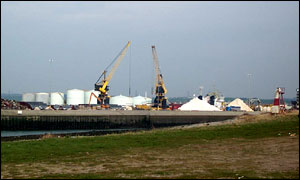 | | Workington docks as they are today |
The first records of a settlement at Workington go back to Roman times, but it was in the 18th Century that it grew into a major industrial town and port.
The iron ore and coal provided jobs for hundreds of people and from the early days when the Curwen family made their fortune on West Cumbrian coal to recent history with heavy engineering and steel, Workington has been a town that lives up to its name: folks there know how to work, and they know how to work hard.Thousands of people used to live and work down on the Marsh and Quay. There was heavy engineering at Chapel Bank and the steel works.
Two thriving communities lived by the shore with pubs, shops, schools and working mens clubs.
All thats gone now. Bulldozed to the ground making way for new employment like the Cattle Movement Centre.
The slag heaps are covered with grass and folks walk their dogs where the steam trains used to haul rails that were exported all over the world.  | | Bob Scott |
Bob Scott, whos a Community Support Worker for Workington Regeneration remembers how all the kids would run after the trains and try to hitch a lift!
Life near the steelworks was your original 24 hour culture: it was never quiet.
The railway ran right next to the houses, the foundries never stopped, the night sky would light up with sparks from the Bessemer and when the slag was tipped the sky burst into orange like a volcano. Workington is a different place today. Its not the thriving industrial town it once was. There are far more white collar jobs.
Many people go out of town to work at Sellafield. Some wards have consistently high unemployment and the town has felt run-down in recent years. Parents worry about the drink, drugs and the lack of things for young people to do. Theres no youth club and even the cinema is out of town.
But compared to rural villages there are plenty of shops, an extremely good public transport network, a rugby league team, a football team and a speedway team. Therere two theatres, a brand new, state of the art college, a healthy club scene and even a gay bar. And things are looking up. Workington Regeneration is spending £7.5 million on making life in the town better for local people and thats not including the £25 million about to be pumped into redeveloping the town centre.
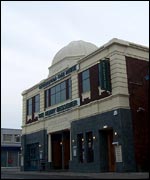 | The old Picture Theatre now home to a national pub chain |
A national chain of pubs has recently gutted and renovated the old cinema which had been derelict and this is just that kind of investment Workingtons looking to attract. Hear Bob Scott talking about the transformation of the Picture House. The things that strikes you about Workington is its very definite Sense of Place.
Its self-contained. Theres a confidence. People who live there know who they are and whats what
It will be fascinating to see what kinds of changes the redevelopment in Workington brings about.
A hundred years ago it was a town on the world map with a booming economy.
Who knows what the next hundred years will bring? More >> A place in the country! |