| 13 November 2014 |

| |
| BBC Homepage | | |
| |||
| Contact Us | | |
History featuresYou are in: Cumbria > History > History features > Millom's Mining Memories 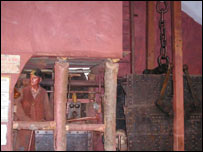 Hodbarrow mine cage Millom's Mining MemoriesDo you remember life in Millom during the iron-mining hey-day? Millom Folk Museum want to know your memories. 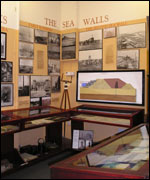 Museum display Millom Folk Museum is running an exciting project which focuses on the days when Millom was at the heart of iron ore mining from the 1800's up to the 1960's. The iron, shipping and rail industries in the Furness area employed most of the Millom residents at one time, although once the iron works were closed down in the mid 1960's, Millom became a very different place with mass unemployment. 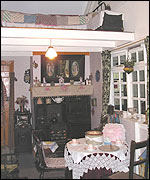 Cottage display However, the museum wants to keep those memories of a more prosperous Millom very much alive through their new project to collect personal memories of life at the ironworks, stories of everyday life in Millom and how families lived during those times. If you have, or if you know of someone who has memories of those times, Millom Folk Museum would love you to get in touch and share what you know. You don't need to have been directly involved in the mining - you may just have some recollections of life in Millom as a child. The information collected will be included in the museum's displays, interactive whiteboard and in the publication of a booklet. How to get in touchYou can contact them in one of the following ways:
Write to: Sharon Arrowsmith, Millom Folk Museum, Station Building, Station Road, Millom, LA18 5AA. e-mail: information@millomfolkmuseum.co.uk Phone: 01229 772555 Visit Millom Folk Museum's website The BBC is not responsible for the content of external websites The museum's website has background information about the ‘iron era’ or you can pop into the museum to see some fantastic artefacts, including one of the cages used at Hodbarrow to transport the miners deep underground. The museum also has an interactive whiteboard which will let you take a tour through time. From 20th -23rd July inclusive, there will be:
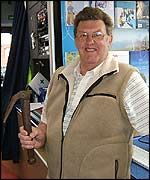 Gerald Barnes with pig lifter Visitors to the BBC bus in MillomGerland Barnes and Arthur Watson visited the BBC bus in Millom with a 'pig lifter' that was made in the Millom ironworks as well as being used in the mines. They both used to work in the mines, and Gerald now works at Millom Folk Museum. Gerald gave us a colourful demonstration of how the pig lifter was used and chatted on air about life in the mines. We certainly did not feel inclined to disagree with a man holding a pig lifter on the BBC bus!! 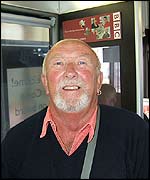 Bob Mandale Bob Mandale went to Barrow Art College in his youth and used to spend his entire summer holiday at Millom ironworks and the iron ore mines sketching. He told us it was a fantastic place to sketch, full of excitement and energy. All the pages in his sketchbook were filled with sinter as he used to watch the furnace being emptied when all the sparks would fly out. He had permission to be in the ironworks premises, but wasn't required to wear any protective clothing. The place was full of noise, but he didn't mind this as he chose to be there for his sketching as opposed to having to be there for work! last updated: 17/02/2009 at 09:51 SEE ALSOYou are in: Cumbria > History > History features > Millom's Mining Memories   |
| | About the BBC | Help | Terms of Use | Privacy & Cookies Policy |