| 13 November 2014 |

| |
| BBC Homepage | | |
| |||
| Contact Us | | |
FeaturesYou are in: Cumbria > Places > Features > Your Community - Hesket Newmarket 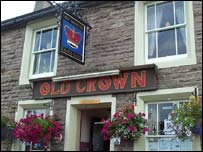 The Old Crown pub in Hesket Newmarket Your Community - Hesket NewmarketHesket Newmarket. From royal admirers to literary greats, medieval torture devices to 'Pigs Might Fly'. There's more to this tiny village on the outskirts of the Lake District National Park than meets the eye... Interesting fact No 1.The local pub and brewery belongs to the village. Literally. The Old Crown in Hesket Newmarket dates back to the 18th century when the village was home to five pubs. In 1988 the owners Jim and Liz Fearnley set up the Hesket Newmarket brewery in a converted barn at the back of the Old Crown. Their real ales gained national recognition, but when the couple decided to retire the business looked in jeopardy. That's when the community stepped in. Fifty-eight villagers and supporters set up a co-operative, firstly to buy the brewery and later to buy the pub itself. People from England, Scotland, North America and even South Africa who had visited the pub and fallen under its spell also rushed to join, donating £1,500 each. The purchase was helped by grant funding from Cumbria County Council Rural Regeneration Fund and the Lake District National Park Sustainable Development Fund. The villagers hoped by owning the business themselves that this would safeguard the pub and its unique character, and secure its future both as a vital amenity for the village and wider community, 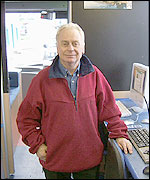 Lou, landlord of The Old Crown The Old Crown today is run by Lou and Linda Hogg and is famous for it's welcoming atmosphere and delicious food. The Hesket Newmarket Brewery is a thriving microbrewery that is going from strength to strength, selling its award winning beers such as 'Pigs Might Fly' and 'Doris’ 90th birthday', all over the country. The Co-operative was officially registered as a community industrial and provident society in March 2003, and the purchase was completed on 21 August that year. The Old Crown is believed to be Britain’s first co-operatively owned pub. Interesting Fact No 2.Hesket Newmarket's name is derived from the Old Norse "eski" (a place overgrown with ash trees) and Old English "heafod" (head or hill). The "newmarket" bit was added on later. Interesting Fact No 3.Prince Charles paid the village a visit in 2004. The Prince is patron of 'The Pub is The Hub' campaign which promotes keeping local pubs alive. He'd heard about the Old Crown co-operative and decided to find out a bit more. As well as visiting the Old Crown, he also took a trip to the village post office. He unveiled a plaque before being treated to a glass of Doris’ 90th ale! The Prince of Wales isn't the only famous fan of the village. Charles Dickens and Wilkie Collins visited in 1857. They were gathering material for an article, The Lazy Tour of Two Idle Apprentices, which Dickens planned to publish in his magazine, Household Words. Interesting Fact No 4.The village green is huge! 5 acres in fact right through the middle of the village. It's where the Friday market, dating back to the 18th century, used to be held. Cattle and sheep fairs were also part of the local scene. In September, an agricultural show carries on the tradition with wrestling, horses, ponies, hounds and terriers. The Green even boasts a replica set of stocks that were used at the last festival and were never taken away. Info from Tom RichardsonTom was born and has lived in the village all his life. He has spent a lot of his time researching the 'goings on' and the people who have lived in the houses in Hesket Newmarket throughout history. Here are just a few of his findings: 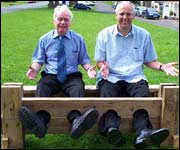 Hesket Newmarket Stocks "The old road - the Street - is of Roman origin. At one time it seems to have been the main thouroughfare from West Cumberland to Westmorland, the East and the South. In earlier centuries, the old road was in frequent use and travellers on it were often robbed by thieves, who hid in the forest. Ralph Engayne, the chief forester of Inglewood granted a license to the Prior of Carlisle to provide shelter for travellers from these outlaws and from snow and storms in winter. By 1829 most of the mines were abandoned but the Driggeth mine was held under lease. However, it was extremely poor so in 1829 the old saying "Caldbeck and Caldbeck fells are worth all England else" was no longer true. By 1858 the railways had arrived. By 1876 there were 4 shops and a butchers. There were 6 tailors in the parish (everyone must have smart clothes for Sundays!!). There were also 2 clogmakers. 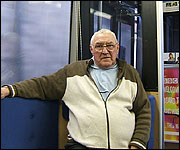 Tom Richardson Hesket Infant School was built in 1874 for 120 children and it had an average attendance of 64. About 3/4 miles from Hesket Newmarket, at Gillfoot, is a relic of ancient Britons, known as the Druid's grove. It consists of 2 parallel rows of large oak trees, beneath which the ancient Britons performed their religious ceremonies. Charles Dickens gave a delightful account of the Inn and how Joseph porter "with his ruddy cheek, a bright eye, a well knit frame, an immense hand, a cheery voice and a strauight bright look" showed them to his best room upstairs. The Inn became a private dwelling house sometime between 1876 and 1894. Later it was referred to locally as Dickens House. There used to be a row of buildings down the middle of the green.. By 1910 all of these properties were derelict. The last of the rubble was cleared away by 1929. The ash tree was planted by Billy Monkhouse about 1932. Mrs Dias, one of the villagers many years ago, used to get very drunk. Once when she was drunk, she put some rubber shoes on the fire and filled the village with black smoke. The door was locked until the fire engine got here and found her blind drunk with gin." last updated: 27/04/2009 at 13:27 You are in: Cumbria > Places > Features > Your Community - Hesket Newmarket
| ||||||||||||||||||||
| | About the BBC | Help | Terms of Use | Privacy & Cookies Policy |