| 24 September 2014 |

| |
| BBC Homepage | | |
| |||
| Contact Us | | |
History featuresYou are in: Cumbria > History > History features > Shap Abbey 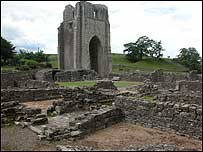 Shap Abbey Shap AbbeyJust over a mile out of the village of Shap, nestling in a valley of the river Lowther lie the remains of Shap Abbey. The peace and solitude that attracted monks in the 12th Century remains remain two of the sites most endearing features today. Describing the site as a "ruin" is unfair, a substantial amount of the west tower remains and the foundations of the living quarters and church remain. The stores for example look as inviting as they no doubt were in the 13th Century when stocked with bread, ale and meats. The toilets can be easily found, although thankfully the effluent that once flushed directly into the river Lowther is long gone. Throughout, the Abbey is complimented with charms such as the tiny coffin in the Chapter House and the etched circles in the church floor that suggest there are plenty of untold stories. The West TowerRichard Redman, said to be Shap Abbey's most eminent Abbot, was the man behind the West Tower. The tower is the most impressive surviving feature and rises from the rolling fields as you approach the Abbey. Despite being built in the 15th Century it stands to its orginal height, only the parapets and the windows are missing.
Timeline1190 - A group of Premonstratensian Canons settle near Kendal. The Canons are from an order of monks that originate in northern France. The monks are interested in marginal sites away from people where they can commune with god. 1200 - The small group of about 12 Canons move to Shap, which in the 12th century was known as "Hepp". "Hepp" changed to "Shap" over the next 100 years. By now they are relatively wealthy thanks to donations from wealthy families including the Cliffords and Vieuxponts. They set up temporary wooden buildings next to the River Lowther and begin building their church and living quarters. Over the next century the chapter house, dormitory, warming house (the only room with a fire in it) and cloisters are completed. A community of about fifty people settle in the precinct surrounding the Abbey, they include shepherds, millers and farmers. The Abbot and up to twelve Canons live a relatively undisturbed life over the next two centuries. The Abbey gradually expands: two chapels are added in the 15th Century and the Church is extended to the East, the extension can still be seen today. 1458-1505 - The Abbey is said to be at its most powerful with Richard Redman as Abbot. He was also elected Canon of Shap. Richard Redman is the man behind the west tower, to this day Shap Abbey's most imposing feature. 1540 - The monks surrounder Shap Abbey to Henry VIII's commissioners as part of the dissolution of the monastries. Demolition begins immediately, lead is removed from the roofs, stone is carried away for other buildings and window glass is removed and melted down. The Canons accept pensions and take up positions as parish priests. 1545 - The land is granted to a local landowner Sir Thomas Wharton, they later pass it to the Lowther family. 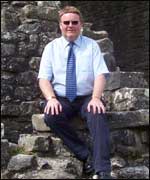 Andrew Davison from English Heritage 1948 - The Abbey remains are placed by the Lowther Estate in the Guardianship of the state. Today the remains are maintained by English Heritage. Listen to an expert talk about Shap Abbey.Click on the link at the top of this page and find out what Andrew Davison, Inspector of Ancient Monuments for English Heritage has to say about the Abbey's history as he gives our reporter Helen Skelton a guided tour. last updated: 02/06/2008 at 13:49 You are in: Cumbria > History > History features > Shap Abbey   |
| | About the BBC | Help | Terms of Use | Privacy & Cookies Policy |