
WELCOME
On this site you can discover the music of four great classical composers: Purcell, Handel, Haydn and Mendelssohn, who all celebrate anniversaries in 2009.
Click on the playlist below to listen and explore. You can share Radio 3's Composers of the Year by adding the 'Step In' badge at the bottom of this page to your website.
LISTEN TO EXTRACTS
In order to see this content you need to have both Javascript enabled and Flash installed. Visit BBC Webwise for full instructions
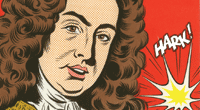 PURCELL
Marking 350 years since Purcell's birth, performances include the operas King Arthur, The Fairy Queen and Dido and Aeneas.
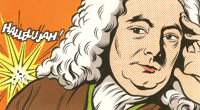 HANDEL
Handel broadcasts include all 40-plus operas, specially-recorded harpsichord suites and Messiah from Westminster Abbey.
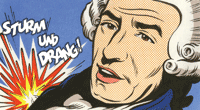 HAYDN
HAYDNThe bicentenary of Haydn's death is marked with performances of all 104 symphonies, and 17 concerts of string quartets.
 MENDELSSOHN
Mendelssohn celebrations include a special weekend in May, with Elijah and new music commissions inspired by his work.
STEP IN PROMO
In order to see this content you need to have both Javascript enabled and Flash installed. Visit BBC Webwise for full instructions
STEP IN BADGE
In order to see this content you need to have both Javascript enabled and Flash installed. Visit BBC Webwise for full instructions
You can link to this page from your own website using this Step In badge. Just copy the code below and paste it into any page on your website.
<a href="http://www.bbc.co.uk/composers/stepin/" target="_blank" style="width:200px;height:200px;"><object width="200" height="200"><param name="movie" value="/staticarchive/d0cf56cdd3efcc3929e83675e05cce343493f489.swf"></param><param name="allowscriptaccess" value="always"></param><param name="wmode" value="transparent"></param><embed src="/staticarchive/d0cf56cdd3efcc3929e83675e05cce343493f489.swf" type="application/x-shockwave-flash" width="200" height="200" allowscriptaccess="always" wmode="transparent"></embed></object></a> CONTROLLER'S INTRODUCTION
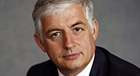
Radio 3 Controller Roger Wright welcomes Radio 3 listeners and BBC Two viewers to Composers of the Year.
Watch the introductionTHE BIRTH OF BRITISH MUSIC

The Composers of the Year feature in a BBC 2 series, in May 2009 - Charles Hazlewood introduces the programmes.
More about the seriesHaydn Creation - Adam & Eve Duet
Adam and Eve offer up a hymn of praise to God for the world he has created. This beautifully simple duet is composed of an oboe obbligato, with pizzicato strings and quiet affirmations from a chorus of angels, over which Adam and Eve (soprano and bass) sing their arching phrases.
Haydn Creation
The Creation is widely considered to be Haydn's masterpiece. It tells the creation story from the book of Genesis and Haydn himself said of it "I was never so devout as when I was at work on The Creation; I fell on my knees each day and begged God to give me the strength to finish the work."
Haydn Farewell Symphony
As with many of Haydn's symphonies, there is a story behind the "Farewell". When Prince Esterházy kept his court orchestra at his summer palace (away from their wives and children) longer than expected, Haydn's last movement subtly hinted to his patron that the musicians might be ready to return home. Over the final bars, each musician in turn stops playing and leaves the stage!
Haydn Trumpet Concerto
Probably the best known and most widely-played trumpet concerto in the classical repertoire, Haydn's is a groundbreaking work because it was written to exploit a new version of the trumpet, which used keys as an alternative to the natural trumpet. However, it was soon superseded by the valved instrument, and Haydn's concerto is today played largely on the modern Eb or Bb trumpet.
Haydn "Emperor" Quartet
Sound familiar? The theme used in this quartet was originally written by Haydn as an anthem for the birthday of the Austrian Emperor Francis II, but is now better known as the German National Anthem.
Haydn Nelson Mass
Within months of the Battle of Trafalgar, Haydn's Mass in D Minor became known as the Nelson Mass. There is no evidence that Haydn ever used that title, however. In fact, Haydn later titled the work as Missa in Angustiis ('mass for times of distress'). Lord Nelson would have met Haydn in 1800 when he visited Prince Esterhazy at Eisenstadt whilst travelling with Sir William and Lady Hamilton.
Haydn Return of Tobias
Immensely popular when premiered by 180 musicians in 1775, Il ritorno di Tobia (The Return of Tobias) was written to be performed at two benefit concerts for the financial support of widows and orphans of musicians in Vienna. The story of Tobias was well known and used by several composers. It is based on the biblical book of Tobit, which tells of Tobias coming home from his adventures and curing his father of his blindness.
Haydn "Lark" Quartet
Haydn was a master of the string quartet, and few composers have equalled his achievements in this genre. The "Lark" is one of his most popular, and was so named (not by Haydn) because of the soaring melodies given to the first violin. This second movement is surely one of his most beautiful.
Haydn Symphony 49 "La Passione"
Haydn wrote 104 symphonies, many of then acquiring titles, not necessarily given to them by Haydn. This symphony, known as "La Passione", was written by Haydn in the midst of his 'Sturm und Drang' period; a movement in music and literature centred on extremes of emotion, and of which Haydn was an important pioneer.
Mendelssohn Violin Concerto
Mendelssohn's violin concerto is one of the most influential and popular concertos of all time, and an important part of the violin repertoire. Concertos at this time normally started with an orchestral exposition of the main themes, so it is unusual that Mendelssohn brings in the soloist immediately. The violin immediately captivates us with its impassioned melody.
Mendelssohn Italian Symphony
The Italian symphony was completed not long after Mendelssohn spent time Italy as part of a grand tour of Europe. Just listening to the joyous opening is enough to convince us of the happy time he spent there.
Mendelssohn A Midsummer Night's Dream
Mendelssohn composed the overture to A Midsummer Night's Dream when he was just 17, although the rest of the incidental music was written much later, and includes the famous wedding march.
Mendelssohn Song Without Words Op 19/ 1
The term "Song Without Words" was coined by Mendelssohn to describe these short lyrical pieces for the piano, which became popular through their accessibility and the rapidly increasing number of pianos in middle-class homes in Europe.
Mendelssohn Song Without Words Op 30/ 1
The term "Song Without Words" was coined by Mendelssohn to describe these short lyrical pieces for the piano, which became popular through their accessibility and the rapidly increasing number of pianos in middle-class homes in Europe.
Mendelssohn Hebrides Overture
Mendelssohn was on a tour of Scotland when he was inspired to write the overture now known as "Fingal's Cave". He sent the opening bars to his sister, Fanny, with the accompanying note: "In order to make you understand how extraordinarily The Hebrides affected me, I send you the following, which came into my head there."
Handel Delirio Amoroso
Delirio Amoroso is one of Handel's Italian Cantatas, written when he was in Italy in his early 20s. The cantata is sung by the nymph Chloris, who tells of her unrequited love for Thyrsis. She sings of Thyrsis's death and imagines going to look for him in Hades.
Handel Samson "Thus when the sun…"
Just two week after completing Messiah, Handel began work on another great dramatic work: Samson (based on Milton's Samson Agonistes) was to become one of his most popular oratorios during his lifetime.
Handel Oboe Concerto No. 3
The Oboe Concerto No.3 is actually the earliest of the three: composed by an eighteen-year-old Handel in Hamburg in 1703. The work shows striking maturity, and also innovation, as the solo concerto as a genre was only just coming to the fore.
Handel Arrival of the Queen of Sheba
The Arrival of the Queen of Sheba is a famous extract from Handel's oratorio Solomon, and is instantly recognisable, remaining popular today as wedding music. Solomon was written in tribute to Handel's patron, King George I, and in this oratorio Handel aligns the piety, wisdom and splendour of the oratorio's title character with that of the King.
Handel Concerto Grosso Op 6/ 6
Handel composed his opus 6 remarkably quickly, and completed all 12 concertos (62 movements!) within a month. This beautiful slow movement was used to great effect in the 1994 film The Madness of King George.
Handel Water Music Suite 1 Hornpipe
Handel's Water Music was written in 1717 for an evening concert on the River Thames requested by King George I. Some 50 musicians played on a barge close to the royal barge and the King enjoyed the music so much he had the suite played 3 times, with the event finishing around 3.30am!
Handel Water Music Suite 3 - Opening
Handel's Water Music was written in 1717 for an evening concert on the River Thames requested by King George I. Some 50 musicians played on a barge close to the royal barge and the King enjoyed the music so much he had the suite played 3 times, with the event finishing around 3.30am!
Handel Water Music Suite 2 Alla Hornpipe
Handel's Water Music was written in 1717 for an evening concert on the River Thames requested by King George I. Some 50 musicians played on a barge close to the royal barge and the King enjoyed the music so much he had the suite played 3 times, with the event finishing around 3.30am!
Largo from Xerxes
This is an orchestral arrangement of the opening aria "Ombra mai fù" from Handel's opera Xerxes, sung by Xerxes in praise of a tree he's sitting under. Its sublime beauty has made it one of Handel's most enduring melodies.
Purcell Dido's Lament
Based on Virgil's Aeneid, Purcell's Dido & Aeneas tells the story of Queen Dido, who gives herself up to death as Aeneas leaves her behind to found Rome. In this haunting final aria, she sings "Remember me, but Ah forget my fate".
Suite from Abdelazer - Rondeau
Purcell wrote the incidental music for Abdelazer in 1695, shortly before his death at the age of 36. The Rondeau became one of Purcell's best-known themes after Benjamin Britten used it for his set of symphonic variations, A Young Person's Guide to the Orchestra.
Come ye sons of art
Purcell composed Come, Ye Sons of Art, Away as an ode for the birthday of Queen Mary II in 1694 (which turned out to be her last). It has seven movements, plus an opening symphony, which Purcell later rewrote and incorporated into his opera The Indian Queen.
March for the Funeral of Queen Mary
When Queen Mary died in 1694, the nation was plunged into grief. She had been one of England's most popular monarchs. Purcell composed this march for the ceremony at Westminster Abbey.
Suite from Abdelazer - Minuett
Abdelazer (or The Moors Revenge) was one of the last plays for which Purcell composed incidental music. Written by Aphra Behn, one of several women playwrights who contributed to the thriving and often bawdy theatrical scene in Restoration London, it was first staged in 1695, the year of Purcell's tragically early death at the age of 36.
Suite from Abdelazer - Hornpipe
Abdelazer (or The Moors Revenge) was one of the last plays for which Purcell composed incidental music. Written by Aphra Behn, one of several women playwrights who contributed to the thriving and often bawdy theatrical scene in Restoration London, it was first staged in 1695, the year of Purcell's tragically early death at the age of 36.
Suite from the Virtuous Wife
It is believed that his music for D'Urfeys play The Virtuous Wife was composed either just before or shortly after Purcell's appointment as organist at Westminster Abbey in 1669 aged just 22, after which he devoted himself mainly to sacred music in accordance with his post.
The Fairy Queen
The Fairy Queen is an adaptation of Shakespeare's A Midsummer Night's Dream, first performed in 1692. The work contains some of Purcell's finest music written for the theatre, and this little "second tune" was written to accompany a scene change.
King Arthur
Enemies and enchantments abound in this musical tale of love, war and magic! With a libretto by John Dryden, the opera was first performed in 1691. Arthur battles to unite Britain and to rescue his fiancé, Princess Emmeline.
BBC iD
BBC iDBBC navigation
BBC links

BBC © 2014The BBC is not responsible for the content of external sites. Read more.
This page is best viewed in an up-to-date web browser with style sheets (CSS) enabled. While you will be able to view the content of this page in your current browser, you will not be able to get the full visual experience. Please consider upgrading your browser software or enabling style sheets (CSS) if you are able to do so.
