| 24 September 2014 |

| |
| BBC Homepage | | |
| |||
| Contact Us | | |
People Like YouYou are in: Cambridgeshire > Features > People Like You > Pakistan - the reality behind the State of Emergency 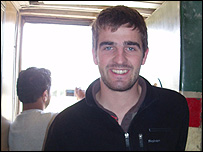 Andrew Webster Pakistan - the reality behind the State of EmergencyBy contributor Andrew Webster Andrew, from St Neots, is living in Pakistan - a country officially in a State of Emergency. Writing from Karachi, he tells us what it's really like and says that the West's perception of the situation is very different to the reality... What do you think? Have your say at the bottom of the page...If there is one thing I would say about living in Pakistan, it is 'expect the unexpected' and this was never more true than the moment I was told that General Musharraf had just placed Pakistan under a 'state of emergency'. Situations like this are accompanied with great uncertainty. What does this mean? How is this possible? What is going to happen next? No answers seemed apparent to me, at least not in that moment. Such uncertainty is followed by panic, especially if you are a 23 year old British citizen newly settled in Pakistan. Am I in danger? Will I have to leave? What must my family be thinking? 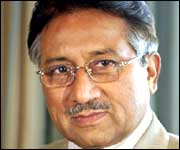 President Musharraf Looking for answers you check the news. However more panic sets in when you find that nearly all news channels have been suspended. This is a world alien to me, a world I had only ever read about in the newspaper, a world of social uncertainty and political rights abuse that is to be condemned and avoided at all costs. Many have asked what it is like to be in a country like Pakistan at such a time using words such as 'terrifying', 'unimaginable' and 'crazy'. This is the reality...Well I am sorry to have to tell you that this is the point at which I shatter your illusions. In the moments following my anxiety and initial panic I was immediately reassured by the Pakistani students with me. Help playing audio/video Although surprised by the decision of their president and uncertain of the future, they shared none of my anxiety, none of my fear and none of my panic. For them, this situation was bad especially for Pakistan's image, but it would resolve itself regardless of what they did and no matter what happened life would go on… and it has. This is the reality of the situation and the reality I want to share. In a context where Pakistan is seen as a place to be feared, a place overrun by extremism and a place rife with corruption and political instability I hope to be able carve a slightly different picture, a picture which shows that front page news does not define a country or its people. But first I should explain who I am and why I am here... Why choose Karachi?I was brought up in St. Neots, Cambridgeshire where I attended Longsands College before moving on to study Political Science at the University of Birmingham. While at university I got involved with the world's largest student run organization AIESEC. AIESEC runs a leadership development programme in which students across 1400 universities based in 100 countries arrange internships for international graduates to gain work experience.
While in Birmingham I helped organize internships for graduates from Kenya, Taiwan, China, USA and Poland and by the time I graduated the opportunity was available for me to do the same. So I chose a 12 month communications internship in a Karachi based financial services company. A strange choice for many, but it didn't feel so strange to me. As someone who had studied politics and spent some time travelling I wanted to live in a country completely different to my own, a country that would challenge my opinions and beliefs every day and a country that was politically exciting. It has to be said that Pakistan ticked all the boxes and since arriving 3 months ago I have had the most eye opening experience of my life. The culture shock...For a start there was the initial shock, the shock of being in a country so diverse and so different to the UK. Everything is so structured in the UK, but Karachi is this random assortment of mess that seems to work. Although not charming to look at (or smell) it's character is dynamic, diverse and exciting. Cars drive wildly along the roads, beggars and hawkers aimlessly wander the streets, there are dirty cafes next to posh office blocks, and rickety old roads being driven on by fast Mercedes Benz. The first thing I saw stepping out of the airport was a McDonalds, the western world's symbol of capitalism, the second thing I saw was a rickshaw - the Asian world's answer to inner city transport. Karachi is a modern mix of commerce, culture and wealth. On the one hand you have multi-million pound businesses, rocking house parties complete with alcohol and more wealth than I could ever have imagined. On the other you have street children selling flowers, conservative Muslim households and poverty driven desperation shown by servants in the office and beggars on the street. Karachi is a weird and wonderful mix, a place to be embraced rather than feared and a place I feel completely comfortable and safe to be in. My average day consists of a mixture of home comforts such as music, movies and fast food and foreign customs such as Islamic culture, electricity blackouts and scorching heat. This isn't the Pakistan I imagined, the Pakistan I read about before I came. It is far more cosmopolitan, far more progressive and far friendlier than I could have ever imagined. Suicide bomberHowever, to say that the social situation has no effect on life here would be wrong. Three weeks ago a suicide bomb in Karachi killed 140 people and something like that can't be ignored. For the two days that followed there was this eerie feeling of fear and uncertainty on the streets. But this was an example of the political situation being thrust onto the everyday man. In general people feel detached from the political games being played out in front of their eyes. It is not the general public that is protesting against the state of emergency, they see little point in comparison to the risk, but it is the lawyers, the party leaders and the journalists that are out on the streets. I imagined the country splitting at the seams and a mass uprising when emergency was declared but this simply has not been the case despite how it may look on the television. And although this makes for a safer Pakistan, it is also a shame for Pakistan. Living in a country where people feel powerless against what their political leaders decide is depressing. Democracy - it's about the peopleAt the moment the state of emergency is seen as the problem by the UK and USA, but it merely exemplifies a bigger problem, a problem that is not acknowledged by either the media or the UK government. Democracy isn't about an election, democracy is about confidence among the people that their opinion matters, that they have a stake in their country's future and that their rights are protected by something bigger than a president or prime minister. In the context of a state of emergency and a war on terror these basic principles seem to have been missed somewhere. The development of these new perspectives has become central to my experience in Pakistan. I am very aware that the experiences I am having within the country are very different to the perception currently held in the UK which I think makes my opinion all the more important to share. But as a general request I would say to you, try and look past the front page news and keep an open mind towards a country and culture that is not quite as alien to our own as we first might think. Because in all honesty as strange as it may sound, I can't think of a place I would rather be than Pakistan at the moment. Andrew Webster, Karachi, 14th November 2007 Help playing audio/video last updated: 29/11/07 Have Your SayComments? Questions? We'll put them to Andrew on your behalf fayeza yahya Mnali saleem Furqan Khan Helen McAvoy (@ Cardiff) Craig McMahon Marilyn Oliveira-Anthony Ayesha Chowdhry Tariq Choudhry Tahira Jaffery Salman Mustafa Siddiqui Karachiite arsalan faruqi Bilal Hashim Ali ammad Andy Morgan Bilal Altaf Faisal Ansari Musa Bajwa Caleb Maria Anwer Sultan Chaudhry Muhammed Saad Kazi your roomate Michael Kamau Hammad Haider Tehmina Abbasi Usman. Usman ul Haq Faisal Abbasi aisha mumtaz junaid-ul-Hasan Zahra Chughtai Ahtesham ali lakhani Yousuf Ahmad Sayan Syed Rehman Ali khawar Gemma Lowe Aamir Umar Hammad Nabi Osto tina james farrukh malik Hanna Qurat ul ain Siddiqui Abid Husain hamza Imran Shaikh Paul Sloss Azeema Mukarram Habib Sana yousuf eranpur AFFAN (freshie) Shazi Day Hassan Arif harisa zahid tehmina Aamna(AIESEC) Poonam Dadlani Mandy Head SEE ALSOYou are in: Cambridgeshire > Features > People Like You > Pakistan - the reality behind the State of Emergency |
| | About the BBC | Help | Terms of Use | Privacy & Cookies Policy |