| The facts | There are fears that increased access to chemical agents will result in biological terror attacks on British soil that may involve the distribution of biological agents such as anthrax or cholera, into the air. Current practice for suspected chemical warfare incidents is usually executed by the army and involves the dispersment of troops into a hot zone with sensing equipment to monitor the surrounding environment for dangerous gasses. This equipment is heavy and about the size of a large suitcase, making it cumbersome, expensive and difficult to manage in a hot zone. It also requires soldiers to be present in a potentially dangerous environment which represents a real risk to their lives. In a similar vein to the development of the electronic nose, researchers at the University of Cardiff are developing an electronic ‘tongue’ that can be dipped into rivers or industrial effluent streams to ensure that the water does not contain anything sinister (from the The Institute of Nanotechnology website). Owlstone is based at St John's Innovation Centre in Cambridge, England. |
Isn't it ironic that whilst we're living the high life adhering to the maxim of 'bigger and better', it's actually the smaller and smarter that makes the biggest difference. Micro-surgery, micro implants and hell, micro-mini's are the small things with the big impact. Now, a Cambridge company has gone one better - they're in nano size and are hoping to have a huge impact in the war against terrorism. | "Aliter catuli longe olent, aliter sues. (Puppies and pigs have a very different smell.) " | | Plautus |
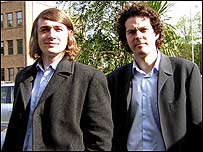
Owlstone is the name of the company who are developing new sensors that may help save lives by enabling early detection of dangerous chemical agents ie. they're creating an electronic nose. They are a young company spawned from Cambridge University which is part of Intersect, the UK's primary sensing network. Intersect is a consortium of science and industry organizations set up and funded by the DTI to research the power of modern sensing technology and identify its uses today. Billy Boyle, one of the founders of Owlstone explained that "all the smells in the air are a bit like marbles of different sizes and what our device does essentially, is find marbles of different sizes in the air / different smells within the air - sometimes you can look for smells of bacon, other times you can look for the smell of chemical weapons". The current technology to detect poisonous gases in the air is fairly cumbersome (the equipment's suitcase sized), difficult to put in place and time-consuming. These guys have come up with a solution in the form of smell smart devices just the size of a button that can be omnipresent within communities (ie implanted in tube station doorways, bus stops, window frames etc) and can be trained to detect and signal an immediate alarm if noxious gases become present.
Not only can the little suckers whiff out nasties like sarin nerve gas, the potential applications of the button sized bloodhound is enormous. It could be used to analyse breath for early detection of things like cancer, diabetes and drugs. It could be used in the home to suss out smoke, carbon monoxide and carcinogens hanging casually in the air. Or, it could become the very best friend of the teacher ('have you been smoking?'), the policeman ('have you been drinking?') or the betrayed wife ('have you been having an affair?') - one whiff and the truth will out! So, what's the damage we asked Mr Boyle…well, pretty much less than a packet of fags it seems; "it costs a £5 to produce and we're using nano-technology to make it and the great thing about using techniques like nano-technology is that you can make them fantastically cheap as well as small". So, it's small. It's low-cost, it's being developed right here in our very own silicon valley and it may just be a life-saving modern-day canary…watch this space... |